
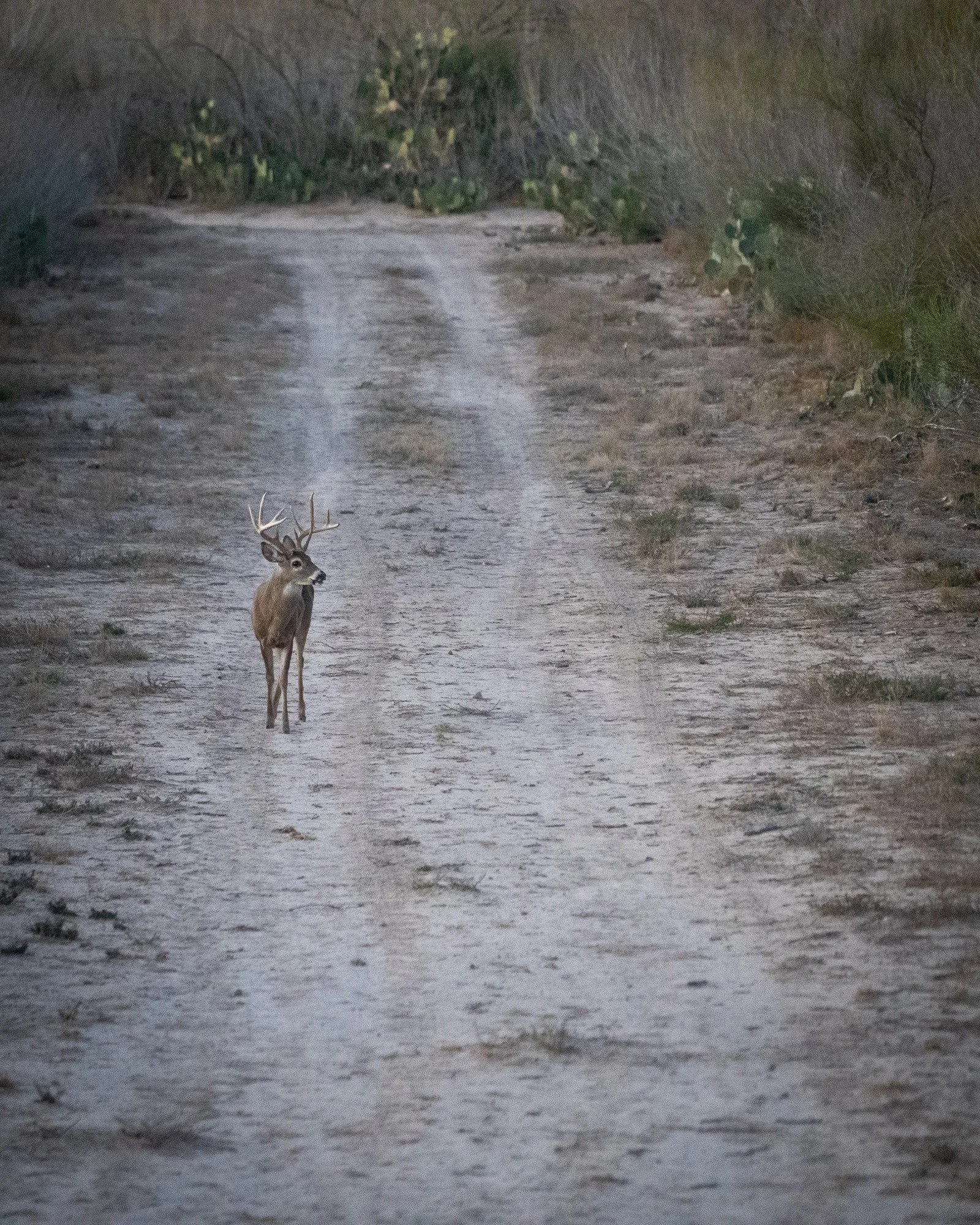
Every November somebody at the gas station has a theory. The moon was full, so the bucks moved at night. A front's coming, so tomorrow's the day. The barometer's falling, so call in sick.
Some of that is worth listening to. Most of it isn't, once you look at what the GPS collars say. This is part two of our Rut RX series, and it lands on the week it matters most: peak breeding in central Oklahoma, with archery only until gun season opens on Saturday, November 21.
The short version
Researchers have put GPS collars on dozens of deer and logged where they were every 15 minutes, day and night, for seasons at a time. When they line those tracks up against the moon and the weather, three things keep showing up:
The moon doesn't move deer in any way a hunter can use.
Day-to-day weather doesn't move them as much as we think during the peak of the rut.
The rut moves them more than anything else.
So this week the calendar is doing most of the work. Our job is to be in a tree when it happens, with the wind right.
What the moon actually does
Start with the study done on Oklahoma dirt. A team from the Noble Foundation and Mississippi State tracked 32 GPS-collared deer, 15 bucks and 17 does, over seven years in southern Oklahoma. They checked daily, nighttime and daytime movement against the phase of the moon. Their conclusion was blunt: moon phase had no effect on any of the three.
Mississippi State asked the question again with 48 GPS-collared bucks over two seasons in central Mississippi, September through February, with a location every 15 minutes. Neither the moon's phase nor its position in the sky changed how active the bucks were. In their words, the rut affects buck activity much more than the moon.
Penn State's deer researchers found the same thing with collared does in Pennsylvania's state forests: no moon phase made them significantly more or less active.
If your moon chart says Saturday is a bad day to hunt, hunt anyway.
What the weather does, and doesn't
Weather is a little more complicated. Most of the season it matters a lot, and it's a big part of how the Hunt Outlook in WRX365 rates a sit. But during the peak of the rut, it doesn't move bucks as much as we think.
The same Oklahoma study found that hour-to-hour and day-to-day weather had an inconsistent influence on how deer moved. The researchers' summary was that daily swings in weather have minimal impact on whitetails in southern latitudes. That's us.
That doesn't mean weather does nothing, even in peak week. It means the small changes don't do much right now, and the big ones are easy to spot:
Heat pushes deer into the dark. Last November, ODWC's central region biologist reported that warm weather had held down daytime activity, with most trail-camera action at night, even as breeding got going. A 75-degree afternoon in the rut is still a 75-degree afternoon to a deer in a winter coat.
A real cold snap helps. In a Mississippi Outdoors article on that state's collar research, a biologist put it simply: generally speaking, you'll see more deer when it's cold. A change in barometric pressure, the researchers said, has to be a very big swing before it shows up.
Averaged out, it's smaller than the stories. Across many deer and a whole season, the same researchers said, weather's effects aren't nearly as strong as you might think.
So we don't chase a falling barometer, and we don't stay home because the forecast looks ordinary. We read the forecast for two things: the temperature and the wind.
Why peak week can feel slow
Here's the part that fools people every year. Right at peak breeding, a lot of the mature bucks go quiet. You had chasing all last week, and now the cameras are dead and the sits are slow. It's easy to blame the moon or the warm spell.
It's usually the does. When a doe comes into heat, a buck stays with her, often in thick cover, for about a day before he goes looking for the next one. We covered the collar numbers on that in last week's Rut RX story. Multiply it by every buck on the place and you get what hunters call lockdown: fewer bucks on their feet at any one time, and the ones you do see are searching hard between does.
That's not a reason to stay home. It's a reason to sit where the does are, stay longer and keep going back.
Rut RX #4: Hunt every day you can this week
The calendar is the thing that moves bucks. Mid-November is peak breeding in central Oklahoma by ODWC's own biologists, and the bucks still searching are searching right now.
Take the days off this week, not next. Gun season opens Saturday, November 21. The woods get busier and the deer get warier the minute it does.
Don't skip a morning because of the moon, or because the weather looks average. Average weather is most weather.
On a warm stretch, pick mornings. Deer that moved all night are often still up at first light.
Rut RX #5: Let the wind pick the stand
If weather has one real job in November, this is it. The wind doesn't decide whether bucks move. It decides whether they smell you when they do.
Check the forecast wind the night before and again in the morning. Fronts swing the wind, often hard, so yesterday's stand may be the wrong one today.
Sit the stand the wind allows, not the one you want. A cruising buck scent-checks the downwind side of doe bedding, and he'll do the same to your tree.
Plan for the afternoon shift. On a front day, the wind you walked in with may not be the wind you're sitting in at three o'clock. Know where you'll go if it turns.
On a hard wind day, go to a blind. Twenty miles an hour in a hang-on is a long sit. Walls and a roof keep you still and keep your scent in.
We let the Hunt Outlook in WRX365 do that math each morning: the forecast wind and temperature for the sit, which stands the wind works for, and which way your scent will drift. It's a forecast, not a promise, so look at the treetops before you commit.
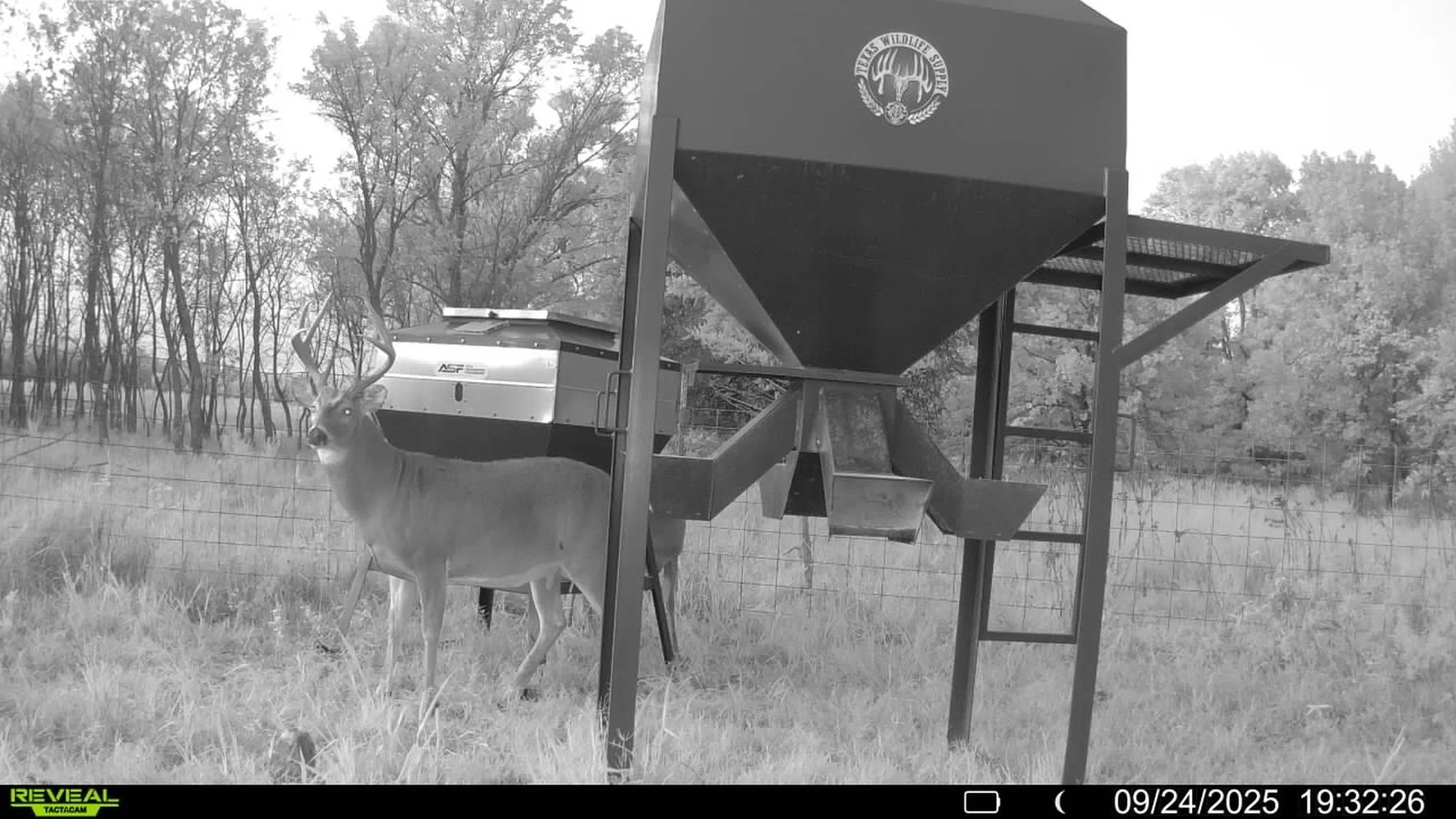
A buck at the feeder in the last light. On a warm day, that's about all the daylight you get.
Rut RX #6: Get through the warm days
Oklahoma Novembers swing. When it turns warm:
Hunt the first two hours and the last hour hard.
Sit near shade and water. A buck that's been chasing in the heat needs a drink, so a shaded draw or a water hole near the does is a good warm-day bet.
Don't quit at noon. A tending buck follows his doe whenever she gets up, warm or not.
Rut RX #7: Hunt water on rut mornings
A buck that chased does all night is thirsty at daylight, and a lot of them stop for a drink on the way back to bed. That makes water one of the best morning sits of the rut, especially in the transition between feeding and bedding cover, where you can slip in without crossing either.
If the water isn't where you need it, put it there. We set Earth Ponds on our own ground for exactly this: a small water hole you can place on the edge of bedding cover, on a spot with good access and a wind that works. The one by our Hidden Foodplot blind sits 25 yards from the window.
The rest of the season in Oklahoma
Now through Friday, November 20: archery only.
Mid-November: peak breeding in the central region, according to ODWC biologists. Last year the northeast peaked in early November and the southeast built through the first two weeks.
Saturday, November 21, through Sunday, December 6: deer gun season. Bowhunters in the woods during gun season need hunter orange.
All season: six deer combined, no more than two antlered. Check every deer within 24 hours on the Go Outdoors Oklahoma app.
Read the regulations yourself before you go, since antlerless limits vary by zone and season.
Age him first
Peak week is when a 3.5-year-old looks his biggest: swollen neck, dark hocks, chasing in daylight. On our ground the goal is still 5.5 and older. Legs, belly, neck, then the rack. If you have to talk yourself into it, he walks.
Your turn
What's the coldest morning you've killed a mature buck, and the warmest? Tell us the county and the temperature.
Do you still check the moon before you hunt? No judgment. We did for years.
Gear in this story
Tactacam Reveal Wind Sensor ($59.99). Live wind speed and direction at your camera, so you know before you leave the truck whether a stand works.
Millennium Q250 Solo Buck Hut ($799.99). A one-man box blind for the front days, when a hang-on in a 20-mile-an-hour wind is a long day.
Tactacam Reveal X 4.0 ($129.99). We hang one on every doe group we can. When the cameras go quiet at peak, the does still tell you where he'll show up next.
Earth Ponds (from $414). A ready-made water hole you can set in the transition by bedding, where the access works.
WRX365 Pro members get 5 percent off everything in the RX Store.
Before you go
When you tag one, score & age your deer free in WRX365 at whitetailrxtools.com and log him in your Harvest Registry. Then share him with us: if he grosses over 130, tap Share with WRX365 on his registry card and send us your photos and the story, and we may post him on our page. He also goes into your season summary on January 20. (Scores and ages are estimates, not official Boone & Crockett or Cy Curtis scores.) WRX365 Pro is $24.99 a year until November 21, then $29.99 for new members. And join the free Hunt Club for next week's Rut RX story, as gun season opens.
Sources
Webb et al. 2010, "Measuring Fine-Scale White-Tailed Deer Movements and Environmental Influences Using GPS Collars," International Journal of Ecology (Oklahoma; 17 does and 15 bucks over seven years; moon phase had no effect on daily, nocturnal or diurnal movement; daily weather had minimal impact in southern latitudes)
Neary et al., "Lunar Legends," Mississippi State University Extension Publication 4068 (48 GPS-collared bucks, two years, central Mississippi; moon phase and position had no effect; the rut affects activity much more than the moon)
Penn State Deer-Forest Study, "Wandering in the Moonlight" (collared does, October 2015 and 2016; moon phase had an insignificant effect)
Mississippi Department of Wildlife, Fisheries, and Parks, "Winter Movements" (more deer when it's cold; pressure needs a very big swing; effects smaller than expected over a season)
ODWC Rut Report 2025 (mid-November peak breeding in the central region; warm weather suppressed daytime activity)
ODWC Deer Big Game Season and ODWC Big Game Regulations (season dates, combined limit, hunter orange, 24-hour check-in)