
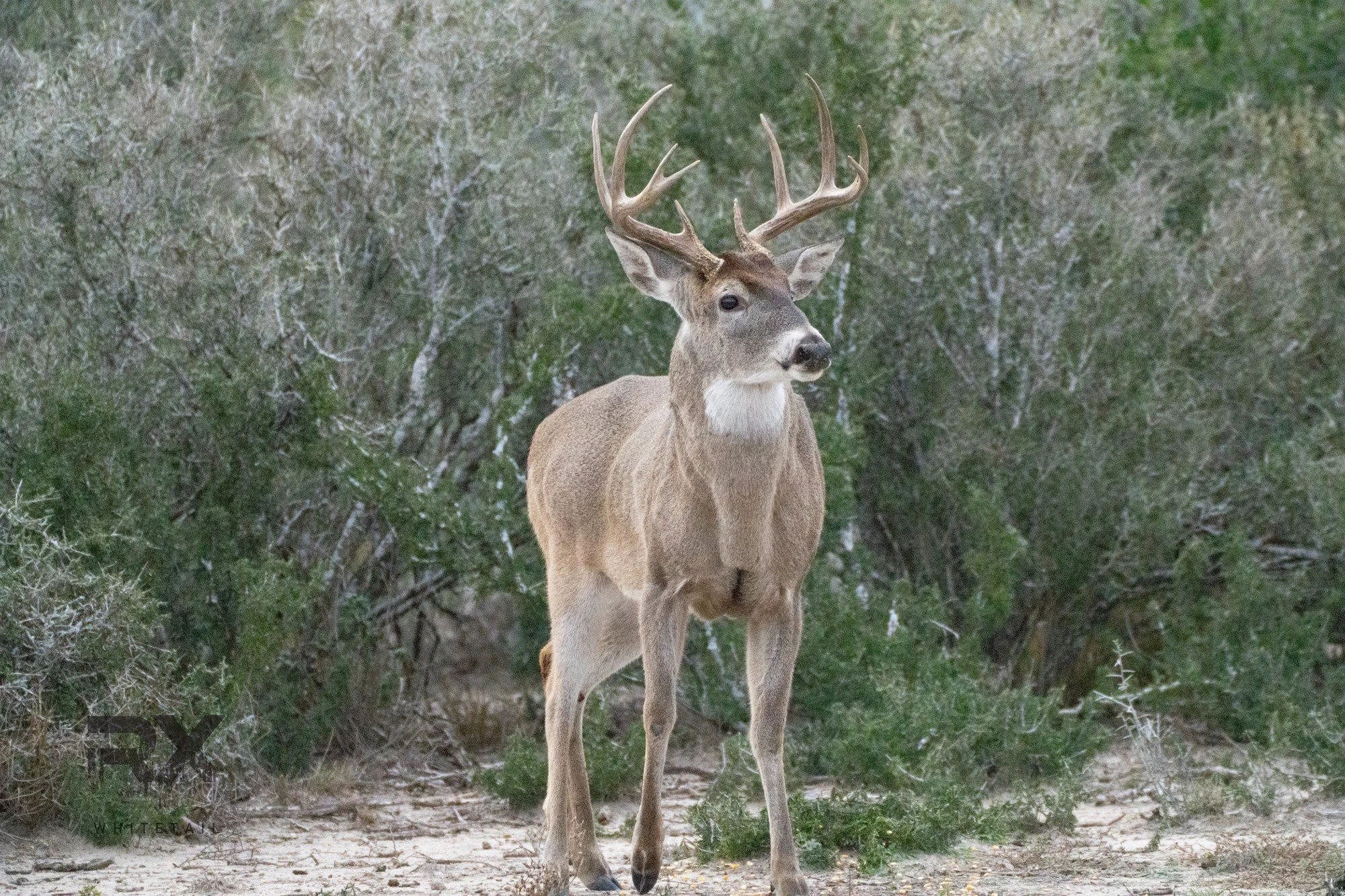
The smokepole is back in the safe, the clocks fell back on Sunday, and for the next 18 days Oklahoma's woods belong to bowhunters. It's also the stretch most of us wait all year for. Bucks that spent October on a tight loop between bed and food start covering ground, and some of them do it in broad daylight.
That changes how we hunt. In October we hunt a buck's pattern. In November there isn't much pattern left to hunt. So this is the first story in our Rut RX series: what the research says bucks are doing right now, and three changes we make to our sits from now until gun season opens on Saturday, November 21.
What the collars say about Oklahoma bucks
Some of the best rut data in the country came off Oklahoma ground. Researchers at the Noble Foundation in southern Oklahoma put GPS collars on bucks that logged a location every 15 minutes for about three months. During the rut, those bucks averaged 4.6 miles a day. Their movement climbed through the weeks leading into the rut and dropped off after it. In a seven-year study by the same Oklahoma research team, bucks covered about 20 percent more ground a day in the rut than after it.
Distance wasn't the only thing that changed. The paths straightened out. Instead of wandering around a feeder or a plot, bucks walked longer, straighter lines and used every corner of their home range. The researchers called it what it looks like from the stand: searching. A buck walking a straight line in November is looking for a doe that's ready.
When he finds one, he sticks with her. The same researchers describe tending bonds that last about a day while she's in heat. That's why your buck can disappear for a day or two and then show up again like nothing happened.
Some of them leave, and come back
A Maryland study took it a step further. Researchers put GPS collars on 32 adult bucks and watched for excursions: trips at least a third of a mile outside a buck's home range that lasted six hours or more.
Here's what they found:
63 percent of the adult bucks made at least one excursion right before or during the breeding season.
The breeding period had the most excursions of any time of year.
The average trip lasted about 10 and a half hours. The longest lasted 40.
59 percent of the trips happened at least partly in daylight.
Two things in there matter to a hunter. First, the buck you've watched all fall may vanish for a day and then come back, so don't write him off. Second, a buck you've never seen may walk through your place on his way to somewhere else. Your October camera inventory isn't a complete list in November.
Rut RX #1: Hunt the does
If the bucks are searching, the shortcut is to sit where they're searching. That's wherever the does are.
As a doe gets close to heat, she tends to stay close to her core area. So the doe groups you watched in October are still your best map in November. On our ground that means three kinds of stands:
The downwind edge of doe bedding. Bucks scent-check bedding cover from the downwind side. Set up where you can cover that trail without blowing the does out of their beds.
The food the does are using right now. Wheat, oats, a green plot or the last of the acorns. Where the does feed in the evening, the bucks come by to check them.
The pinch between two doe groups. A buck walking a straight line from one group to the next will take the easiest cover between them: a creek crossing, a brushy draw, the inside corner of a field or a gap in a fence line.
Don't overthink it. If a stand's camera hasn't shown a doe in a week, it isn't a rut stand this week.
Rut RX #2: Sit longer
October rewards short, careful sits. The rut rewards time in the tree.
If six out of ten excursions happened at least partly in daylight, and the bucks covering the most ground are cruising between doe groups, the middle of the day is fair game. Some of the best bucks we've seen on our own cameras in November showed up while most hunters were at lunch.
Here's how we sit longer without hating it:
Pick one stand for the whole day. Choose the one the wind works for all day, not one for the morning and one for the evening. Walking out at 10 and back in at 2 is two more chances to get caught.
Pack like you mean it. Water, lunch, a warm layer for the afternoon wind shift, a charged phone and a pee bottle.
Get comfortable. A good seat on a hang-on, or a box blind on the windy days, is the difference between four hours and ten.
Stay sharp from 10 to 2. Read if you have to, but look up every few minutes. A cruising buck in daylight won't stay long.
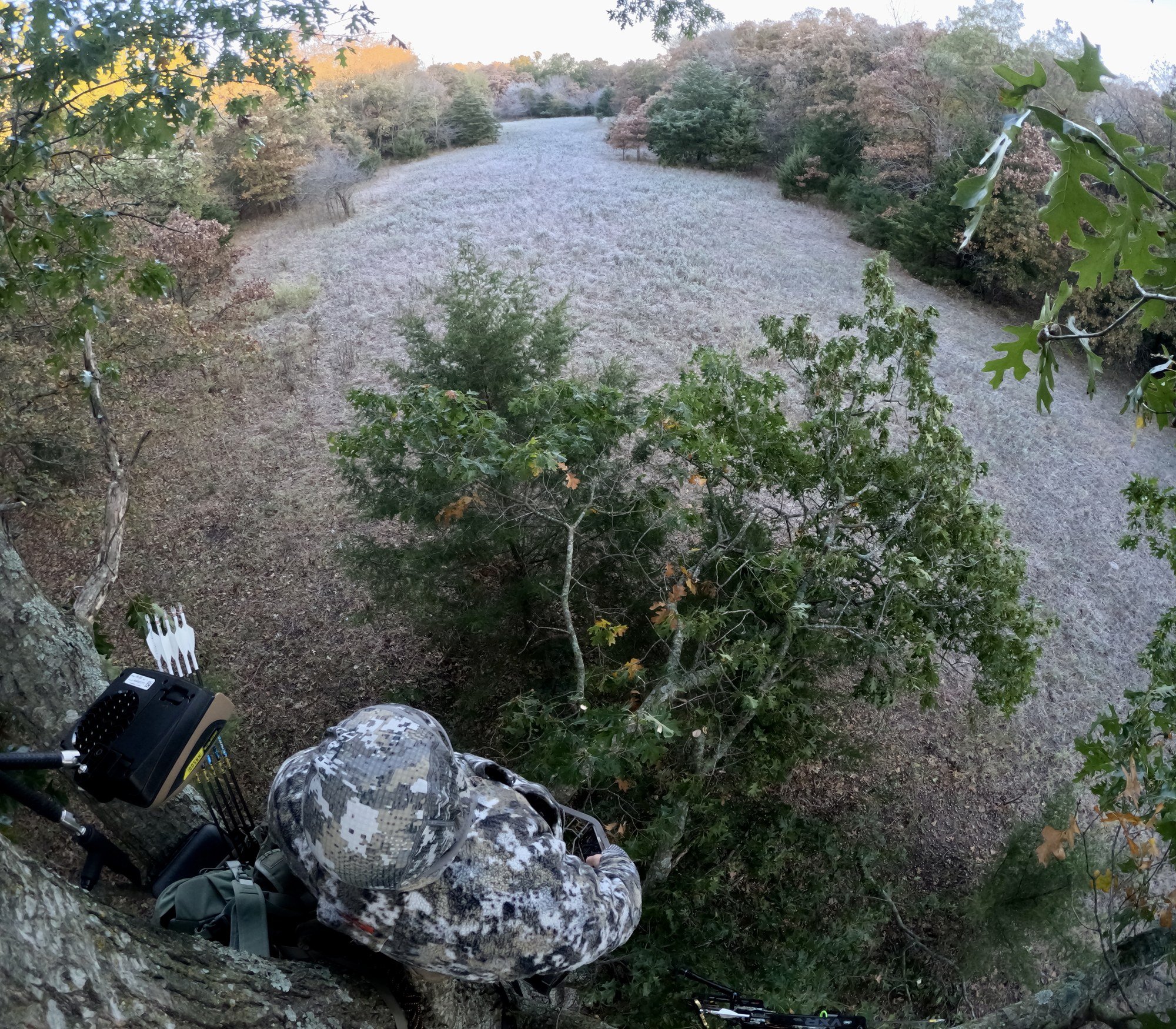
Lunch is in the pack. The stand stays occupied.
Rut RX #3: Protect the wind and rest your stands
The rut makes bucks careless around does. It doesn't make them careless about your scent. A cruising buck scent-checks the downwind side of everything, and that includes your stand.
Hunt the stand the wind allows. If the wind is wrong for your best pinch, sit somewhere else today. It'll still be there tomorrow.
Rest your stands. The more you sit one, the more the deer learn it. Rotate where you can.
Plan the exit. With deer on their feet all day, getting out after dark without bumping a doe group matters as much as getting in.
We let the Hunt Outlook and the stand wind calls in WRX365 do that math each morning: which stands the wind works for, which way scent will drift and when deer are predicted to move.
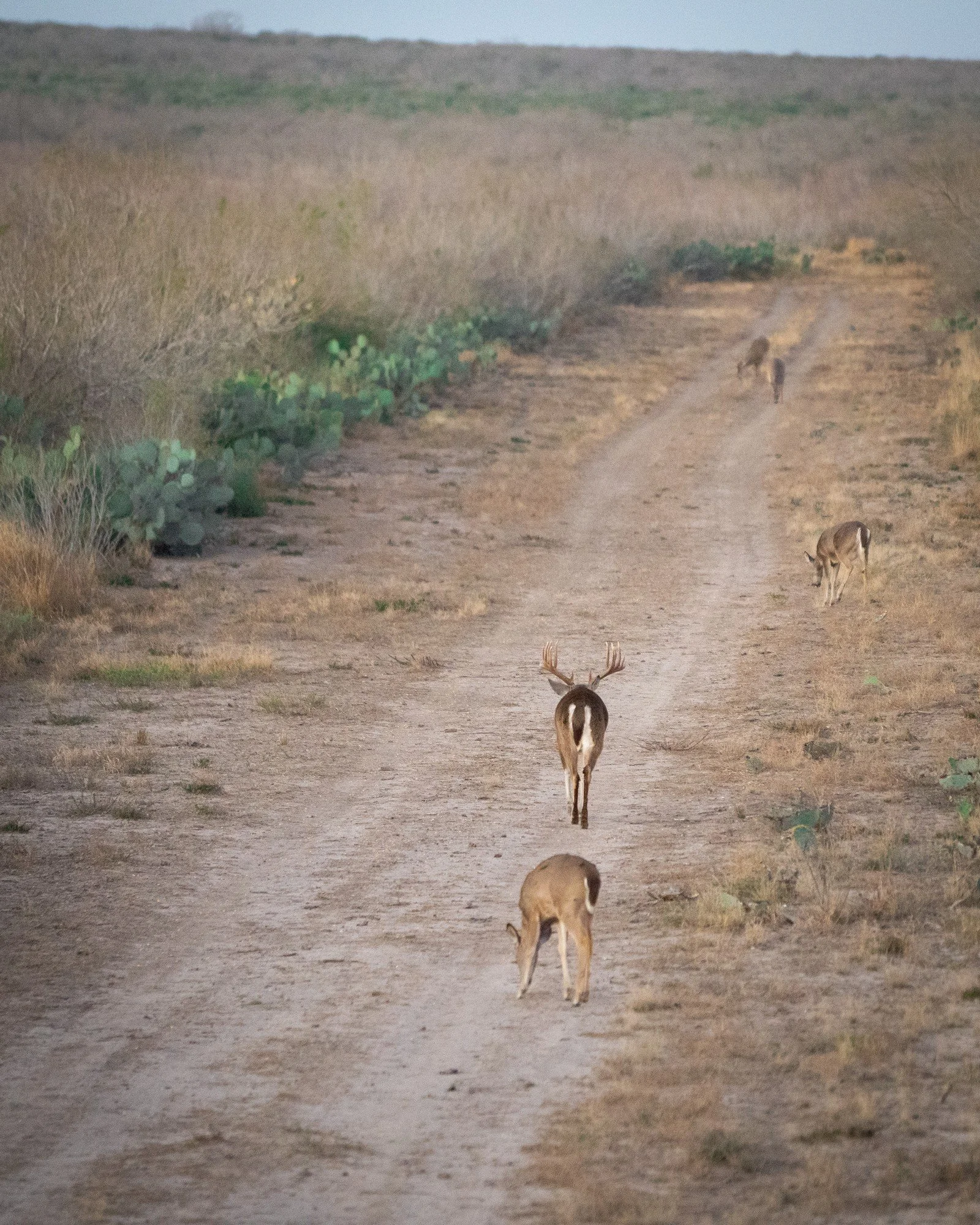
A buck on the move takes the easy line between doe groups.
Mind the new clock
Daylight saving time ended on Sunday, November 1. Shooting hours don't care about your clock. They still run from half an hour before sunrise to half an hour after sunset. But everything you set by the clock just moved an hour.
Mornings start an hour earlier on the clock than they did last week. Set the alarm by sunrise, not by habit.
Evenings end an hour earlier. Leave work sooner and be settled sooner.
Timers don't change themselves. Anything you run on a timer, like a feeder, is still on the old clock until you reset it.
The next three weeks in Oklahoma
Now through Friday, November 20: archery only.
Mid-November: peak breeding in the central part of the state, according to ODWC biologists. Last fall their regional reports had the northeast peaking in early November and the southeast building through the first two weeks.
Saturday, November 21, through Sunday, December 6: deer gun season. Bowhunters in the woods during gun season need an orange hat or vest.
All season: six deer combined, no more than two antlered. Check every deer within 24 hours on the Go Outdoors Oklahoma app.
Read the regulations yourself before you go, since antlerless limits vary by zone and season.
Age him first, especially now
Last week's Field Notes was about aging a buck on the hoof. The rut makes it harder. A 3.5-year-old with a swollen neck chasing a doe across a wheat field looks like the biggest deer in the county. On our ground the goal is still 5.5 and older. Legs, belly, neck, then the rack. If you have to talk yourself into it, he walks.
Your turn
Where's the best rut stand on your place: a doe bedding edge, a food source or a pinch?
Have you killed a mature buck between 10 and 2? Tell us the county and the time.
Gear in this story
Novix Helo Hunt Ready System ($669.99). Novix's lightest hang-on with a set of sticks. Light and quiet enough to hang the pinch the sign points to, not the tree the old stand is in.
Tactacam Reveal X 4.0 ($129.99). We hang one on every doe group we can. When the does are there, we know where the bucks will be checking.
Millennium Q250 Solo Buck Hut ($799.99). A one-man box blind for the windy days, when ten hours in a tree sounds like punishment.
WRX365 Pro members get 5 percent off everything in the RX Store.
Before you go
When you tag one, score & age your deer free in WRX365 at whitetailrxtools.com and log him in your Harvest Registry. He goes into your season summary on January 20. (Scores and ages are estimates, not official Boone & Crockett or Cy Curtis scores.) WRX365 Pro is $24.99 a year until November 21, then $29.99 for new members. And join the free Hunt Club for next week's Rut RX story.
Sources
ODWC Deer Big Game Season (2026-27 season dates; six-deer combined limit, no more than two antlered)
ODWC Big Game Regulations (shooting hours, orange for archers during gun season, check-in within 24 hours)
ODWC Rut Report 2025 (regional rut timing; "mid-November is peak breeding time" in the central region)
Webb and Gee, "In Search of Receptive Does: What Buck Movements Reveal," Boone and Crockett Club (Oklahoma bucks averaged 4.6 miles a day in the rut; straighter paths; tending bonds of about 24 hours)
Webb et al. 2010, International Journal of Ecology (male daily movement 20 percent greater in the rut than after it)
Karns et al. 2011, Southeastern Naturalist (32 adult bucks; 63 percent made an excursion before or during breeding; average 10.5 hours; 59 percent partly in daylight)