
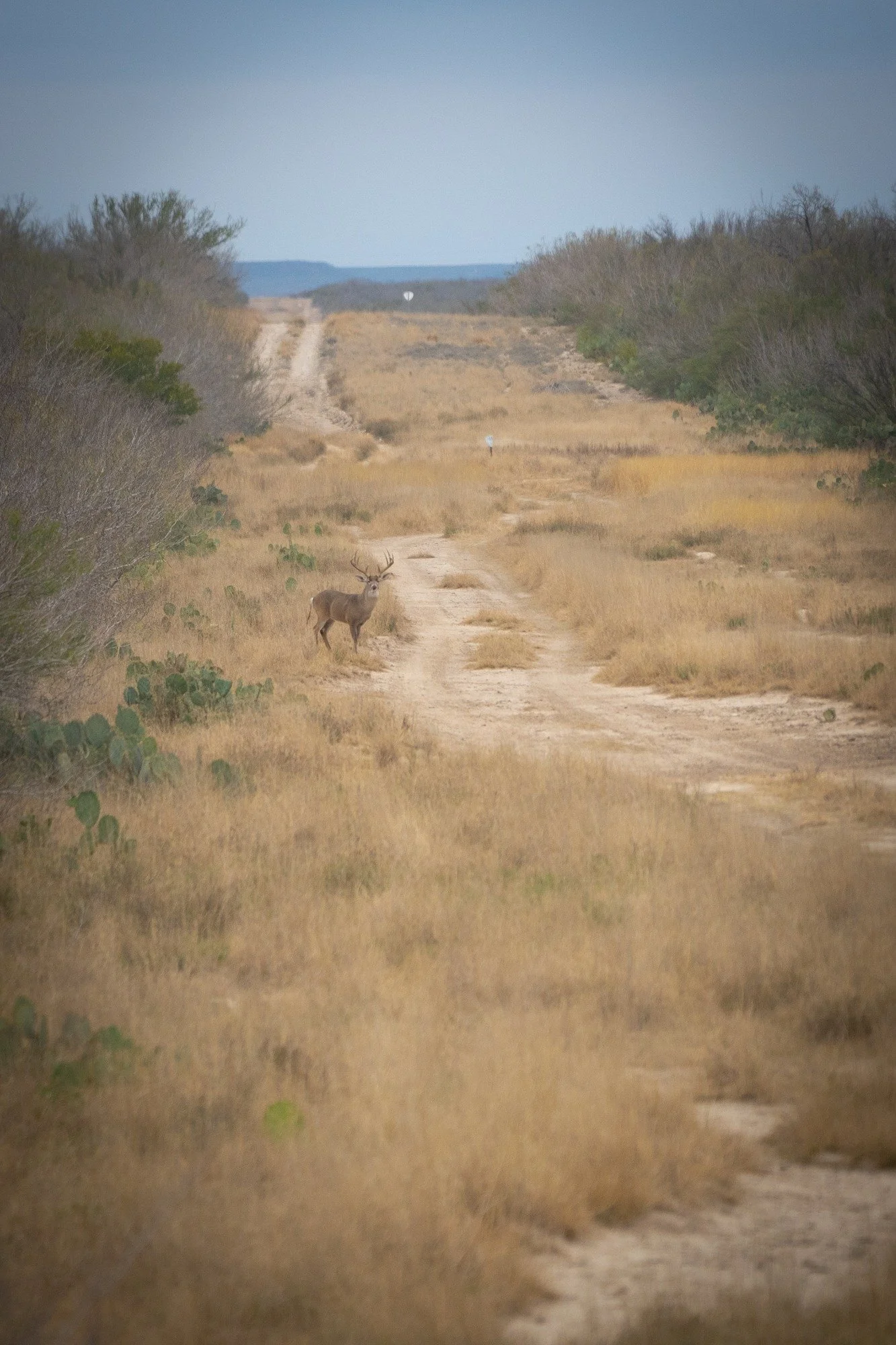
On Saturday a lot of Oklahoma changes color. Deer gun season opens Saturday, November 21, and the place you've bowhunted alone for seven weeks suddenly has trucks at every gate and orange in every tree line.
Every year somebody at the local donut shop says the big bucks leave when that happens. Most of the research says they don't. They tuck in, they move less in daylight and they move later. That's good news if you know where to look. This is part three of our Rut Rx series: the last bow week, the opener, and what GPS collars say a mature buck does when the orange comes out.
The short version
Most bucks don't leave home when the pressure comes. They use a smaller piece of it, closer to cover.
Daylight movement drops on the days hunters are out, and it comes back a few days after they leave.
Some bucks don't go nocturnal so much as show up later, often right around the end of legal light.
Every buck is a little different. The ones that live longest seem to know exactly where people aren't.
What the collars say about pressure
Oklahoma has its own collar data. A team led by Andrew Little collared deer here and tested three levels of hunting pressure: none, one hunter per 250 acres and one hunter per 75 acres. The more hunters in the woods, the less the deer moved. They shrank down to a small corner of their range and stayed in the thickest cover they had.
In Alabama, Auburn University researchers followed GPS-collared deer through the last five weeks of the season, rut included. In their first look at 10 of those deer, daytime movement was highest on Thursdays and Fridays. By Saturday it had dropped 22 percent, and by Sunday 34 percent. Over the weekend the deer used smaller areas, stayed bedded longer in daylight and shifted more of their movement into the dark. By Wednesday and Thursday, daytime movement was back to normal.
In Maryland, researchers collared nine adult bucks through a two-week firearms season. Their home ranges and core areas didn't change size. Their movement did drop, but the researchers said at least part of that was the end of breeding, which lined up with gun season.
Mississippi State's deer lab has followed 60 collared bucks. Their lead researcher, Bronson Strickland, put it this way: the only pattern in how bucks handle pressure is that there's no pattern. He didn't see them go nocturnal so much as arrive later. Bucks that hit a food plot 30 minutes to an hour before sunset in archery season were showing up after sunset by the late season. They stayed in their core areas. They just went to the spots nobody was disturbing.
Put it together and the picture is plain. When the orange comes out, a mature buck doesn't pack up and leave. His core area gets smaller, he moves later and he gets stays to cover. The buck you've chased all bow season is probably still on your place Saturday afternoon. He's just not where everybody is looking.
Rut Rx #8: Hunt this week like it's the last quiet week
It is. Monday through Friday, November 16 to 20, the woods belong to bowhunters one more time.
The rut isn't over. Plenty of does are still being bred, and the bucks that aren't with one are still checking doe groups. Sit where the does are, like we covered in part one.
Let the wind pick the stand, like we said in part two.
Hunt Thursday and Friday hard. If the Auburn pattern holds anywhere near Oklahoma, the last two weekdays before a busy weekend are as good as daylight gets.
Rut Rx #9: Be in before they are
Opening morning, every truck in the county is moving in the dark. That pushes deer, and some of them get pushed past you.
Get in early. An hour before shooting light, not 15 minutes. Let the woods settle around you.
Sit through the middle of the day. Hunters get cold and walk out around 9 or 10, and again after lunch. That's when deer get bumped off the neighbors and go looking for somewhere quiet.
Know where the quiet is. Look at your map for the thickest cover farthest from roads, gates and the places people walk. That's where pushed deer end up.
Stay put when you hear shots. A shot on the neighbor's often means deer on the move. Give it half an hour before you even think about climbing down.
Rut Rx #10: Hunt the hide, not the field
The open field is where everybody sits on opening day, and it's where the bucks quit showing up in daylight.
Back into the cover. A stand on the edge of a cedar thicket, a brushy draw or a creek bottom will see more daylight bucks this week than the big field.
Hunt the trail between hiding spots, not the trail to food. A pressured buck moves from cover to cover first and eats after dark.
Stay off your own access trails. Deer learn where people walk. Plan your access to not mess up your hunt. Good entrance in exit is key to minimizing pressure.
Watch the time stamps. When a buck's photos slide from evening into the middle of the night, he's telling you that spot is too hot. A cellular camera tells you from the house, without walking in to look.
We lean on WRx365 for this part. The map shows the bedding and sanctuary we've drawn and our walk-in routes, and the Hunt Outlook tells us each morning which stands the wind works for. When the neighbors are loud, that's how we pick the quiet stand.
Rut Rx #11: Hunt the work days
The weekend is when the woods are loudest. In the Auburn data, a hunter's odds started to fall after the first day of the weekend and didn't recover until the pressure had been gone at least two days.
So if you can only take a few days in gun season, take weekdays. Monday is still recovering. By midweek, deer are moving like nobody was ever there.
Rut Rx #12: Orange on, tag ready
Gun hunters need a hat and an outer garment above the waist, together at least 400 square inches of hunter orange. Orange camo counts if it adds up.
Bowhunters in the woods in Oklahoma during gun season need an orange hat or an orange outer garment above the waist, even on public land closed to rifles.
Shooting hours run from half an hour before sunrise to half an hour after sunset.
The Oklahoma gun season limit is four deer, no more than one antlered, with antlerless limits by zone. Your combined limit for the year is six, no more than two antlered.
Check every deer within 24 hours of leaving the hunt area, on the Go Outdoors Oklahoma app or online, before you process it.
Read the regulations yourself before you go, since antlerless limits vary by zone and season.
Age him first, especially with a rifle
A rifle makes a 150-yard shot easy, and a 3.5-year-old swollen up in the rut looks huge at 150 yards. On our ground the goal is still 5.5 and older. Legs, belly, neck, then the rack. Use the scope to look, not to decide. If you have to talk yourself into it, he walks. And if the freezer needs filling, opening weekend is a fine time to take a doe.
Your turn
Where do the bucks on your place go when gun season opens: the thick stuff, the neighbor's, or nowhere at all?
What's the latest in the day you've killed a mature buck on opening weekend? Tell us the county and the time.
Gear in this story
Millennium Q400 Guard House Buck Hut ($699.99). A box blind you can tuck into the edge of the cover, so you can sit all day out of the wind and stay still when the neighbors push deer your way.
Tactacam Reveal Pro 4.0 ($159.99). Hang it on the trail between hiding spots. When the bucks' time stamps slide back into daylight midweek, you'll know without walking in.
Half Rack Waterproof Soft-Sided Cooler (from $130). Gun season usually means meat in the truck. Get it cold fast.
WRx365 Pro members get 5 percent off everything in the Rx Store.
Before you go
When you tag one, check him in, then score & age your deer free in WRx365 at whitetailrxtools.com and log him in your Harvest Registry. He goes into your season summary on January 20. (Scores and ages are estimates, not official Boone & Crockett or Cy Curtis scores.) WRx365 Pro is $24.99 a year until gun season opens Saturday, November 21. After that it's $29.99 for new members, and anyone who joins before then keeps $24.99. And join the free Hunt Club for next week's Field Notes, after the opener.
Sources
ODWC Deer Big Game Season (gun season Nov. 21–Dec. 6, 2026; four deer, one antlered; six-deer combined limit, two antlered; zone antlerless limits)
ODWC Big Game Regulations (400 square inches of orange for firearm hunters; orange hat or upper garment for archers during firearm seasons; shooting hours; check-in within 24 hours)
Wiskirchen and Ditchkoff, "Exclusive Research: How Much Are Deer Patterning Hunters?" Deer & Deer Hunting (Auburn GPS deer: daytime movement down 22 percent Saturday and 34 percent Sunday, normal by Wednesday–Thursday; preliminary, 10 deer; also summarizes the Oklahoma hunter-density study, Little et al., Basic and Applied Ecology)
National Deer Association, "Hunt Whitetails on Work Days" (Oklahoma study: no pressure, 1 hunter per 250 acres, 1 per 75 acres; under high pressure deer moved less, kept a small range and used heavier cover)
Karns et al. 2012, "Impact of Hunting Pressure on Adult Male White-tailed Deer Behavior," SEAFWA Proceedings 66:120–125 (nine adult bucks, Maryland; home range and core area unchanged during the firearms season)
Outdoor Life, "Secrets of GPS Collared Bucks with Dr. Bronson Strickland" (Mississippi State, 60 collared bucks; no single pressure pattern; arrive later rather than go nocturnal; stay in core areas)