
The September Shift: Why Mature Bucks Disappear
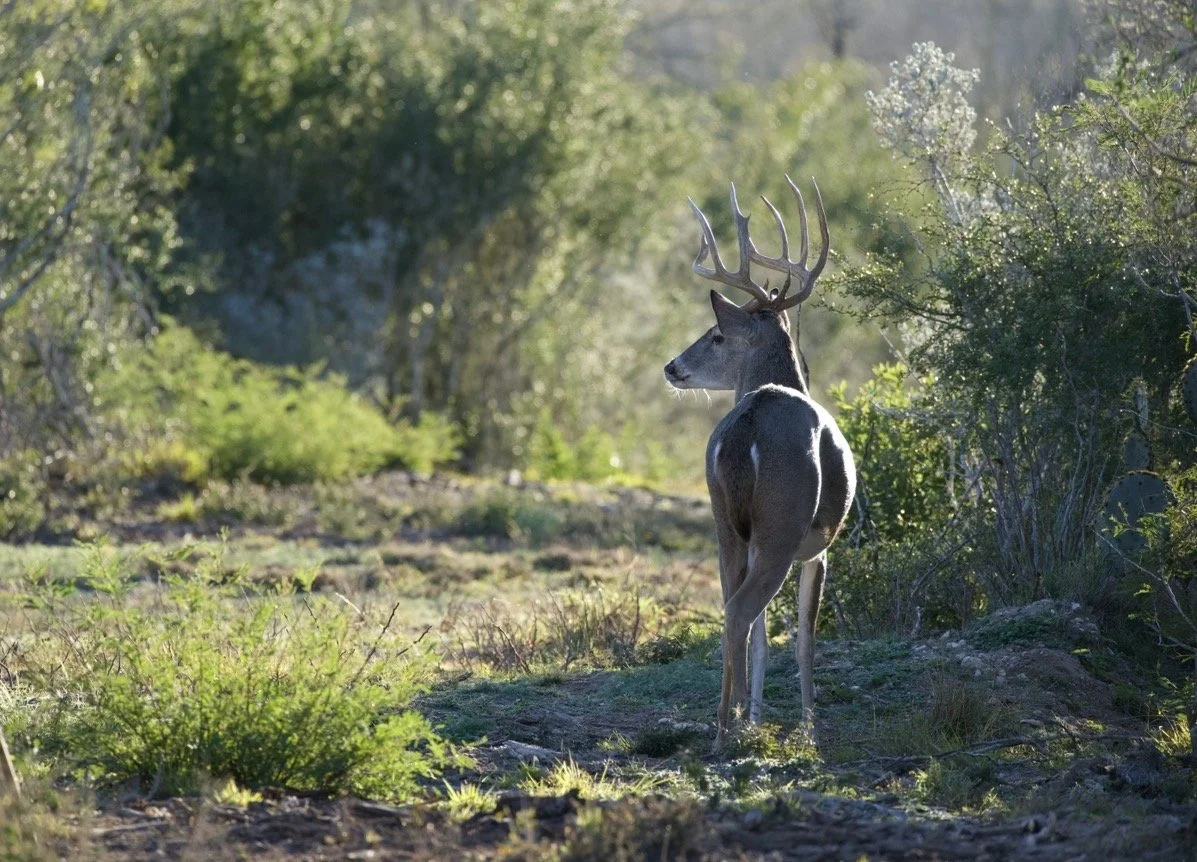
Every year it seems to happen the same way. You spend June, July, and August watching a buck develop. Maybe you have hundreds of pictures of him. You know which field he likes, which feeder he prefers and about what time he's going to show up every evening. By late August, you almost feel like you have him figured out.
Then September hits, and he's gone.
The buck that was showing up five nights a week suddenly disappears from your cameras. The bachelor group you watched all summer starts breaking apart. Daylight pictures turn into middle-of-the-night pictures, or you stop getting pictures altogether. Naturally, we start looking for an explanation. Did somebody bump him? Did he move to the neighbor? Did EHD get him? Is he even still around?
Sometimes one of those explanations is right. But a lot of the time, I think we give too much credit to the idea that the buck disappeared and not enough to the possibility that his pattern simply changed.
September is a unique time in a whitetail's year. His physiology is changing, food sources are changing, his social structure is changing and, at about the same time, hunters start spending a lot more time in the woods. Put all of those things together and the buck we thought we had figured out in August can become a completely different animal by October.
That's what we call the September Shift.
Summer Bucks Are Living a Different Life
One of the biggest mistakes we can make is assuming the deer we're watching in July is going to behave the same way in October.
During the summer, a buck's priorities are largely centered around nutrition and antler development. Food is plentiful, native vegetation is productive and agricultural crops can provide a tremendous amount of forage. Bucks also commonly tolerate each other enough to form the bachelor groups we all enjoy watching.
Those conditions can make summer bucks extremely visible. They may enter the same soybean field night after night, visit the same feeder every evening or show up on the same camera within a surprisingly predictable window. When four or five bucks are traveling together, one camera can make it look like your property is absolutely loaded.
The problem is that we're looking at a temporary pattern.
Research into the annual testosterone cycle of adult white-tailed bucks has documented a dramatic seasonal increase during late summer and fall. Testosterone concentrations rise as the breeding season approaches, alongside antler hardening, velvet shedding and changes in reproductive and social behavior.
Research manipulating seasonal light cycles in whitetails gives us an even better idea of what's happening. Experimental changes involving melatonin and photoperiod have altered the timing of testosterone changes, antler development, velvet shedding and rutting behavior. In one experiment, manipulating melatonin to simulate changing seasonal light advanced velvet shedding and rutting behavior by roughly 50 to 55 days.
The takeaway for me is pretty simple: these changes aren't happening because September 1 showed up on the calendar. A buck's body is responding to changes in his environment well before we see the results.
As daylight shortens, his hormonal profile changes. Antlers finish mineralizing and velvet comes off. The breeding season is getting closer and the social environment among bucks starts changing with it.
The deer is changing, so we shouldn't be surprised when his pattern changes too.
He Didn't Disappear. His Pattern Did.
When a mature buck disappears from a summer camera location, it's easy to assume he left the property. Sometimes he did. But what disappeared may simply be the pattern that made him visible to us.
We probably give trail cameras more credit than they deserve in this regard. A camera doesn't tell us where a buck lives. It tells us that he walked through one relatively small piece of ground at one particular moment.
Oklahoma State University makes a similar point in its guidance for formal trail-camera population surveys. Reliable estimates require cameras to be adequately distributed across a property because camera placement and sampling design affect which deer are detected. The same principle applies when we're trying to keep track of an individual buck.
A relatively small change in travel can make a big difference in what we see. A buck might enter a field from a different direction, start using another transition, change bedding areas or simply move past the camera after dark. He doesn't have to move to the neighbor's farm to disappear from our camera inventory.
That's why we try not to make big management decisions based on one camera going cold.
No picture doesn't necessarily mean no deer. It means no detection.
Those aren't the same thing.
Food Is Changing Too
At the same time the buck is changing, so is the landscape around him.
The food source that was king in August isn't guaranteed to remain king in September or October. Agricultural crops mature, native vegetation changes, soft mast becomes available, food plots develop and eventually, depending on the property and the year, acorns begin hitting the ground.
Whitetails are incredibly adaptable feeders. Research examining seasonal diets has documented deer moving from grasses in the spring to forbs and leafy browse during summer and increasingly toward acorns and other fruits in the fall. When available, acorns can be an extremely preferred food source.
One study looking specifically at acorn production found that radio-collared deer expanded their home ranges to incorporate areas producing acorns during mast fall. Acorns accounted for roughly half of observed foraging time during peak mast availability. More recent camera-trap research has also documented relationships between acorn abundance and deer visitation around certain oak species.
That's important when we're trying to understand why a buck suddenly stopped showing up at the same summer food source.
If he's been traveling several hundred yards every evening to reach a field and suddenly has a highly preferred food source much closer to secure cover, there's no reason to expect him to keep making the same trip.
He didn't quit eating. He found another grocery store.
And sometimes that grocery store happens to be under a closed canopy where we can't glass him from the road and don't have a camera. To us, he disappeared. To him, he's just eating somewhere else.
The Bachelor Group Starts to Change
Summer bachelor groups are one of my favorite things to watch. You can have a three-year-old, four-year-old and six-year-old buck feeding within yards of one another every evening, which seems almost strange considering what their relationship may look like a couple of months later.
Whitetail social behavior changes as the breeding season approaches. Research has documented dominance hierarchies among bucks as well as relationships between testosterone, maturity, social position, scraping and other breeding-related behaviors.
I don't think we should turn that into another hard rule and say every bachelor group breaks up on a certain date. Deer rarely make things that easy for us. The important part is that the social conditions that allowed those bucks to spend the summer together are changing at roughly the same time their physiology is changing.
As that happens, the pattern we've been watching can change with it. Instead of five bucks entering a field together every evening, those deer may start using different travel routes, different bedding areas, different timing or different portions of the property.
The number of deer didn't necessarily change. How they're using the property did.
Then We Show Up
While all of those natural changes are taking place, we add another variable to the equation: us.
September is when a lot of properties suddenly become busy again. We're hanging stands, trimming shooting lanes, filling feeders, checking cameras, planting food plots, moving blinds, running tractors and driving UTVs. Places that may have seen very little human activity throughout the summer suddenly have people moving through them regularly.
There's actually some really interesting research on this from Oklahoma.
A study conducted on a 1,861-hectare property experimentally evaluated the effects of hunting pressure on 37 adult male white-tailed deer. Researchers compared bucks exposed to different levels of hunting pressure and found that the deer altered their movement behavior in response to perceived hunting risk. The intensity of hunting pressure influenced that response.
That supports something hunters have believed for a long time: our presence can change deer behavior.
I also think we can take that idea too far. It doesn't mean a mature buck smells one human footprint and immediately moves three miles away. Deer live around people every day. But it does mean that our activity becomes another variable affecting how a buck uses a property.
How often we enter matters. Where we enter matters. Where we park, how we check cameras, the routes we use and how predictable our activity becomes all contribute to the pressure we're putting on a property.
We spend an incredible amount of time studying where deer move. Sometimes we probably need to spend a little more time studying where we move.
Mature Bucks Don't All Behave the Same
If modern GPS research has taught us anything, it's that we should be careful when using the words "always" and "never" with mature whitetails.
Hunters love making rules about old bucks. They don't move during daylight. They stay tight to bedding cover. They become completely nocturnal. They won't cross an open field. Whatever the rule is, eventually somebody puts a GPS collar on a buck that ignores it.
A recent study in southwest Wisconsin analyzed GPS data from 188 collared male whitetails collected over four years during the breeding season. Researchers found measurable differences in movement among age classes, including higher hourly movement rates among two-year-old males than the other ages studied.
I'm less interested in turning that particular finding into another hunting rule than I am in what the larger body of GPS research continues to show us: individual bucks can behave very differently.
Some bucks are remarkably predictable. Others make excursions that would be almost impossible to understand from trail-camera pictures alone. Two mature bucks can live on the same property, experience the same weather and have access to the same food and cover, yet use that landscape differently.
That's probably one of the reasons mature whitetails continue to fascinate us.
We love making rules about them. They don't seem particularly interested in following them.
The goal isn't to predict every move a mature buck makes. We can't. The goal is to understand enough about the things influencing him that we make better decisions when the pattern changes.
Don't Panic When Your Best Buck Disappears
If there's one thing I'd take away from all of this, it's not to panic when a buck you've watched all summer disappears in September.
Our first reaction is usually to go find him. We move cameras farther into the property, walk trails, check bedding areas and start looking for confirmation that he's still there. The problem is that by doing that, we may introduce even more pressure at exactly the wrong time.
Before pushing into the best cover on the farm, look for the simplest explanations first. Are acorns beginning to drop? Did another preferred food source become available? Did something change with an agricultural field? Is the bachelor group starting to separate? Has activity on the property increased? Could the buck simply be reaching the same location later or using a route that bypasses the camera?
Maybe he left. Mature bucks absolutely can shift where they're spending their time.
But don't let three days without a picture convince you of something the data doesn't actually tell you.
The Whitetail RX Prescription
When a mature buck disappears during the September Shift, our approach is pretty simple.
Protect his secure cover. Don't tear apart the best bedding area on the property just because you want another picture. If we're trying to hold mature deer, there is value in having areas where they don't regularly encounter us. Sometimes knowing a little less in September puts us in a much better position later in the season.
Follow the food. Don't assume August food sources are going to drive movement all fall. Pay attention to mast production, native browse, agricultural changes and food plots. When a preferred food becomes available, expect deer to adjust.
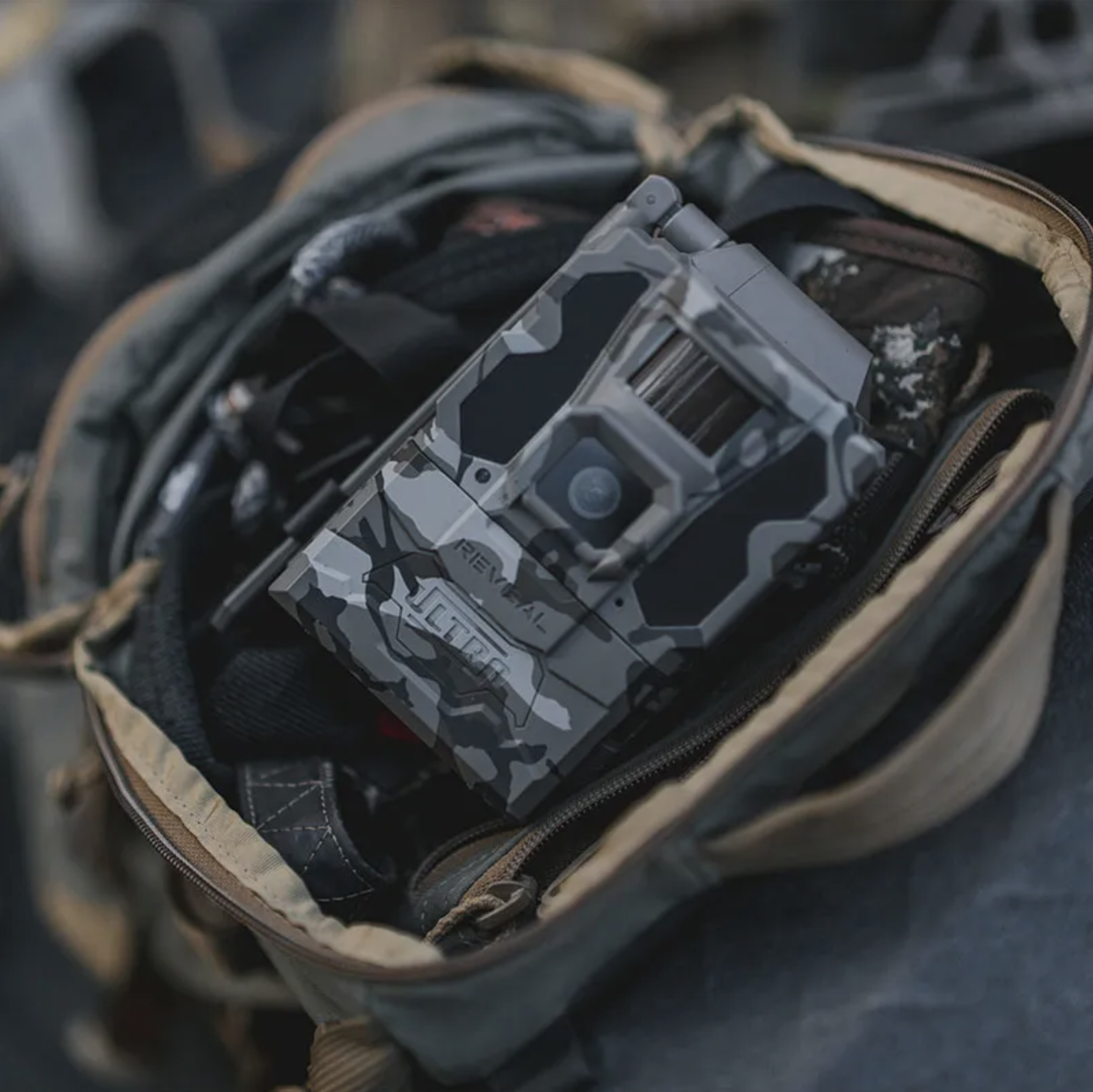
Move cameras before you move yourself. Use cameras around low-impact travel corridors, food transitions and field entrances where you can continue learning without repeatedly walking through core cover. This is also one of the times of year when we get the most value out of cellular cameras. The less often we have to physically enter a property just to pull a card, the better.
See the trail cameras we use on our properties →
Audit your own pressure. Pull up a map of your property and ask yourself a simple question: If I were a deer, how much of this farm would actually feel secure? Look at roads, UTV routes, camera checks, stand access, food-plot work, feeder visits and hunting access. Sometimes the easiest variable to change isn't the deer. It's us.
Finally, give the new pattern time to develop. One camera going cold isn't a conclusion. It's one piece of information. Let the deer tell you what's happening before you decide for them.
September Is a Transition, Not a Disappearance
We spend all summer watching antlers grow, and it's easy to become attached to the summer version of a buck. We know where he eats, who he's with and when he shows up. After enough pictures, we start feeling like we know him.
Then September reminds us that we probably don't know him nearly as well as we thought.
His hormones are changing. The best food on the property may be changing. His relationship with other bucks is changing. His movement can change. And at almost exactly the same time, we're putting more pressure on the landscape.
Understanding that transition changes the way we interpret our cameras and, more importantly, the way we manage our properties.
Our goal isn't to keep a mature buck standing in front of the same camera 365 days a year. It's to build a property that still gives him a reason to be there when his priorities change.
Give him the food he wants, the cover he needs and enough security to feel comfortable using both.
Then have enough discipline to stay out of his way.
Because when that buck you've watched all summer suddenly disappears in September, sometimes the best move you can make is no move at all.
Research Referenced
Bubenik, G.A., Smith, P.S. & Schams, D. (1986). The effect of orally administered melatonin on the seasonality of deer pelage exchange, antler development and reproductive hormones. Journal of Pineal Research, 3(4), 331–349.
Bubenik, G.A., Schams, D. & Coenen, G. (1987). The effect of artificial photoperiodicity and antiandrogen treatment on antler growth and plasma levels of LH, FSH, testosterone, prolactin and alkaline phosphatase in the male white-tailed deer.
Little, A.R. et al. (2016). Hunting intensity alters movement behaviour of white-tailed deer. Basic and Applied Ecology, 17(4), 360–369.
McShea, W.J. & Schwede, G. (1993). Variable Acorn Crops: Responses of White-Tailed Deer and Other Mast Consumers. Journal of Mammalogy, 74(4), 999–1006.
Miller, K.V., Marchinton, R.L., Forand, K.J. & Johansen, K.L. (1987). Dominance, Testosterone Levels, and Scraping Activity in a Captive Herd of White-Tailed Deer. Journal of Mammalogy, 68(4), 812–817.
Whitetail RX — A 365-day pursuit of the perfect whitetail management prescription.