
Every summer in Oklahoma gets hot. Every summer gets dry. But some years make you change the plan.
August 2026 was one of those years. Oklahoma recorded its third-warmest and fifth-driest August since statewide records began in 1895. Statewide rainfall averaged just 0.85 inches, and the average daytime high reached 100.8°F. By the end of the month, drought covered the entire state.
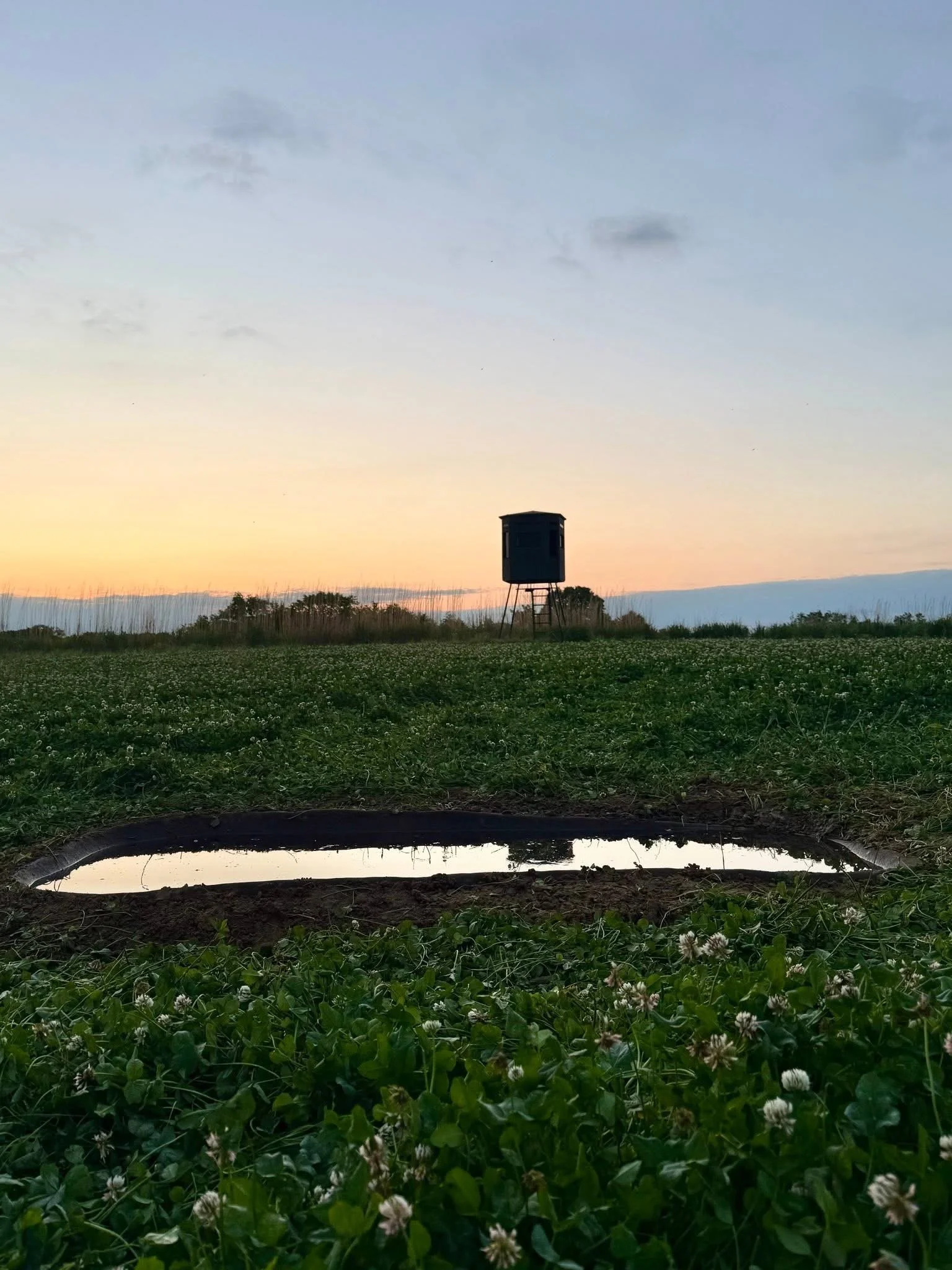
We could see it on the properties we manage. Our clover was essentially burned up. Creek beds that normally hold water were dry. Some of our oaks showed obvious stress, and we're seeing very few acorns in areas that normally produce them.
Then September brought something we'd been waiting for: rain.
We planted our fall plots September 9 with a substantial rain forecast for the 10th and 11th. Since then, we've been fortunate enough to continue catching moisture at pretty consistent intervals.
The response has been impressive. But what happened before the rain may be more important than what happened after it.
Drought doesn't just make a property dry. It can change where quality food exists, which natural food sources are available, where deer find dependable water and ultimately how deer use the property.
The map didn't change. The resources on it did.
We Learned This One the Hard Way
In our early years of planting food plots, we'd catch a good rain in August and think it was time to get seed in the ground.
It made sense. Hunting season was getting closer, moisture was in the forecast, and we wanted our plots established as early as possible.
Then Oklahoma would remind us that getting something to germinate and getting it established are two very different things.
The seed would come up beautifully. Then the rain would stop, temperatures would climb again and those young plants would burn up. More than once, we'd end up planting the same ground again in October.
We even reached the point in some years where we'd pull a fire trailer through the property and manually water plots trying to keep them alive. In past years, we've gone as far as hauling a water trailer through our Oklahoma properties to keep newly established food plots alive.
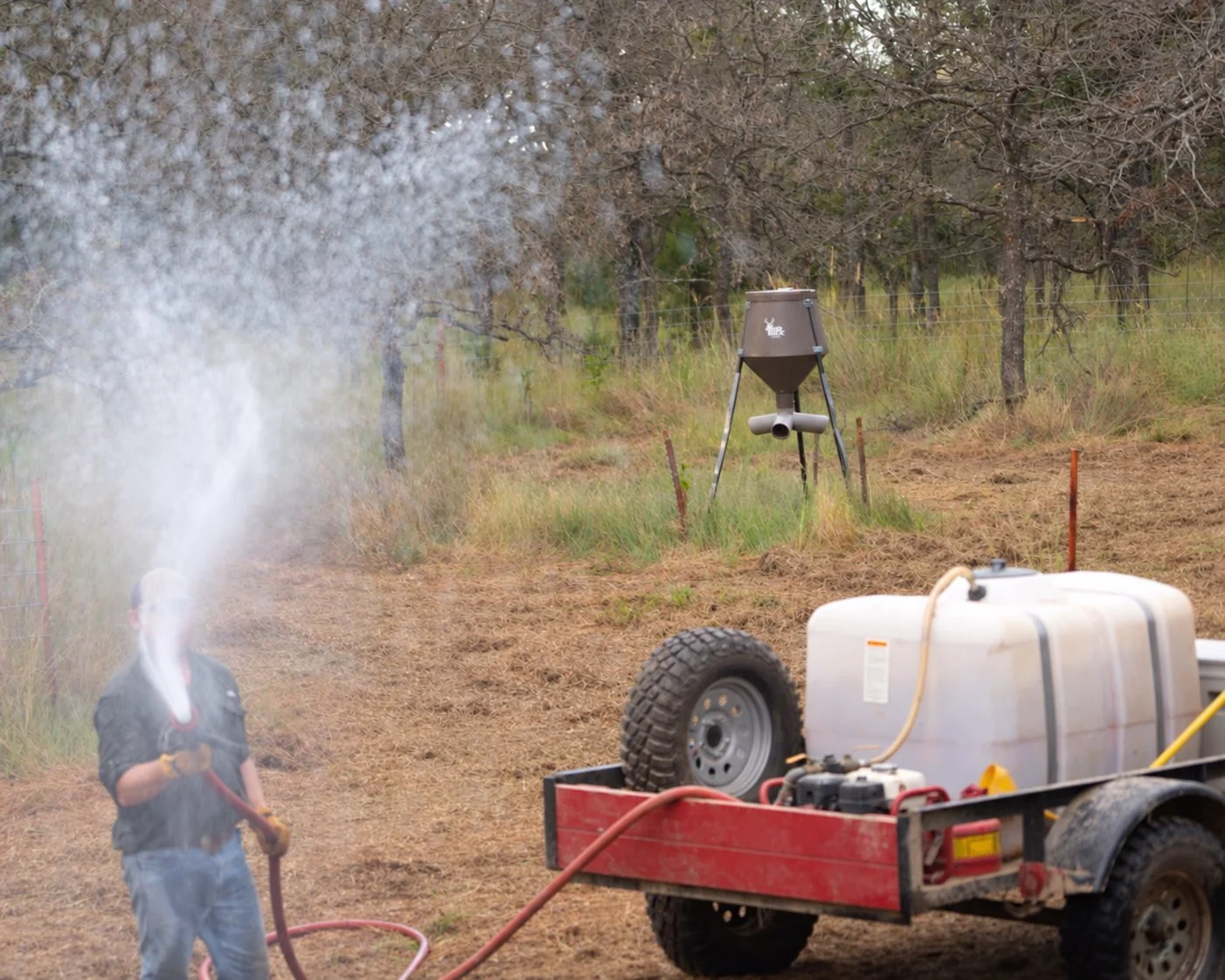
Over the last two seasons, we've gradually pushed our planting dates later. We're less interested in planting according to an arbitrary date and more interested in putting seed in the ground when it actually has a reasonable chance of becoming established.
This year, that meant September 9.
We saw meaningful rain approaching for September 10–11 and decided that was our window. Since then, we've been fortunate enough to continue receiving rain every few days.
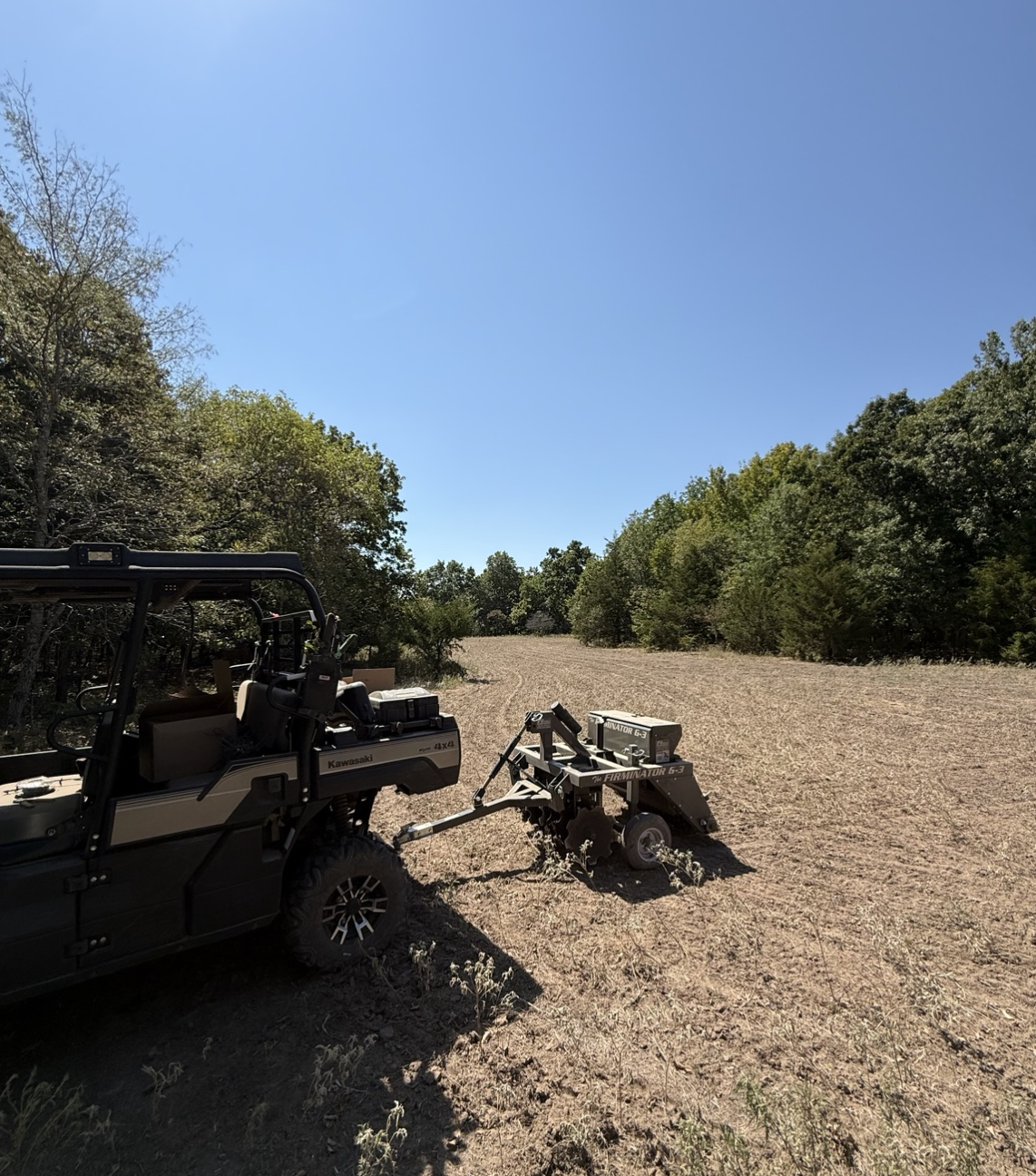
Conditions before this year's planting. After the August drought, we waited for a meaningful rain before putting seed in the ground.
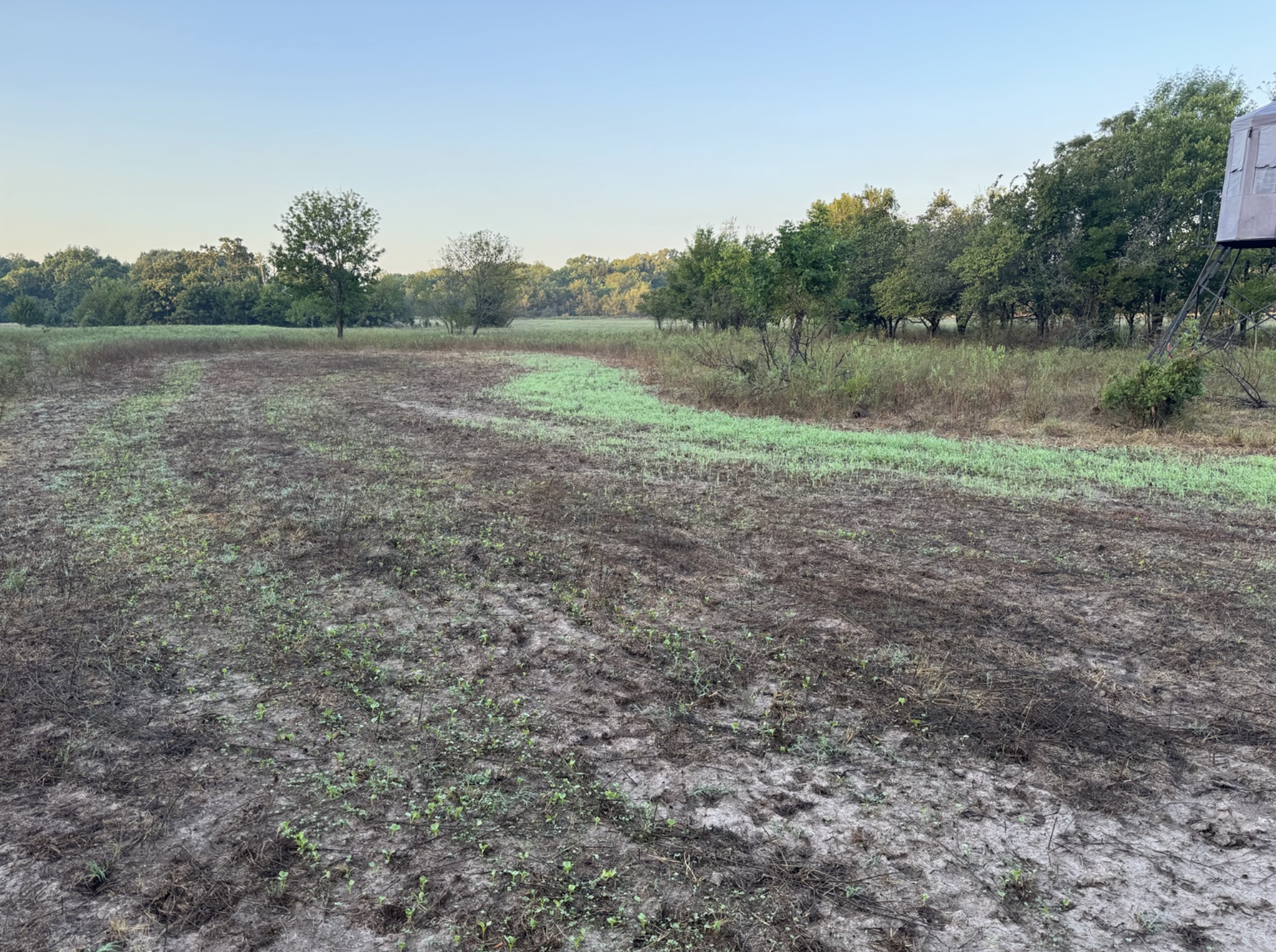
The result after September moisture arrived.
There's a lesson in those pictures that took us several years to learn:
Getting germination isn't the goal. Getting an established food plot is the goal.
We Changed What We Planted, Too
Timing wasn't our only adjustment.
This fall we're using several Whitetail Hill mixes, including Beards & Bucks, No Till No Problem and Kill Plot. Given the dry conditions we'd experienced, we wanted cereal grains playing a meaningful role rather than betting everything on a brassica-heavy planting.
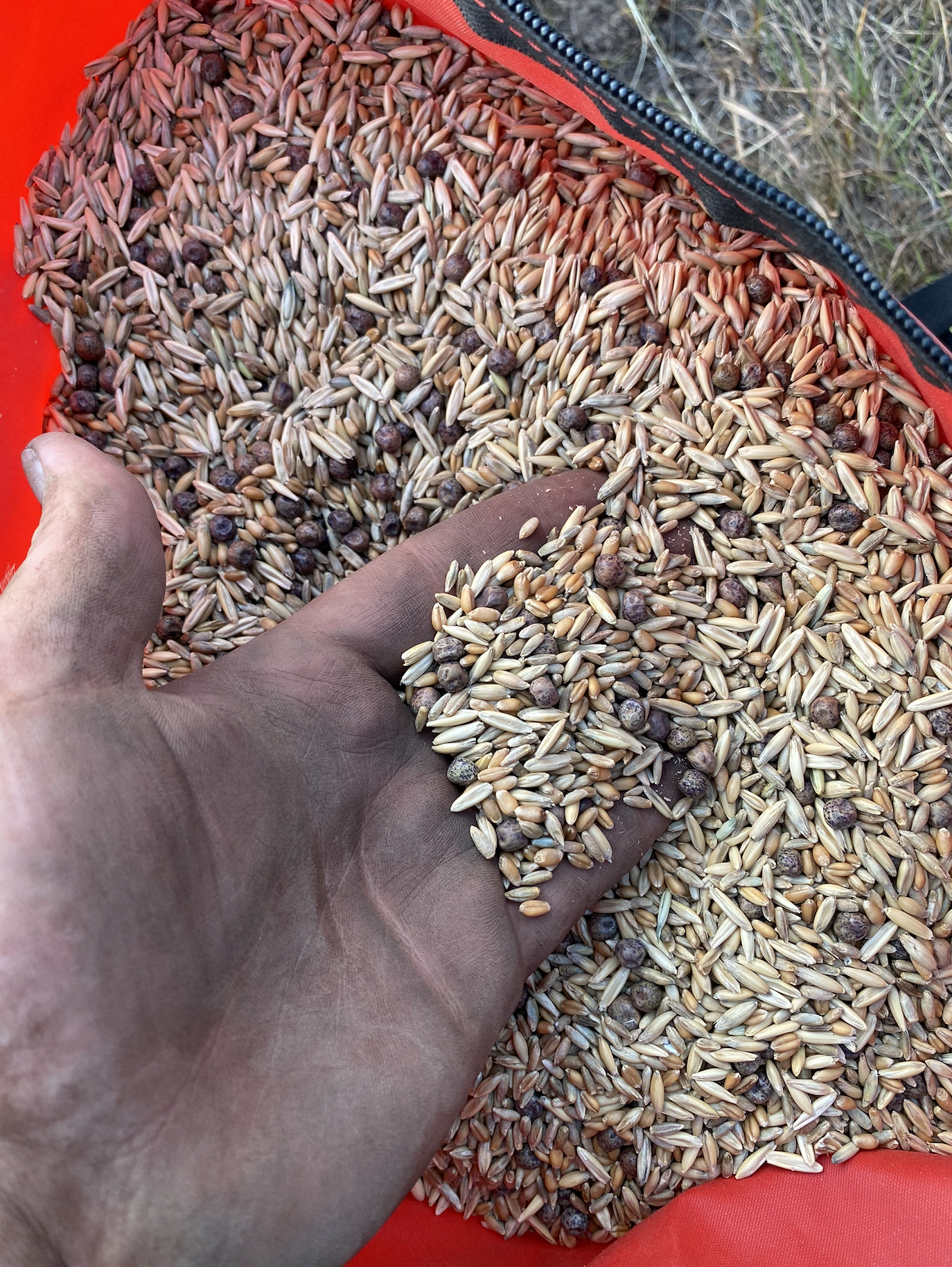
We used different blends as bases on different plots and top-seeded Kill Plot to add diversity. In heavily shaded woods plots, we went directly with Kill Plot. We're also planning to over-seed with winter wheat and cereal rye as the plots develop.
Oklahoma State notes that wheat and rye are commonly consumed by deer throughout winter and can tolerate fairly heavy grazing during much of their growth period.
But food plots aren't a cure for drought.
That's an important distinction. OSU's food-plot guidance points out that drought limits planted forage just as it limits native forage. Food plots can influence deer distribution, but quality habitat still requires the larger combination of food, cover, water and space.
A food plot should be part of the system.
Not the entire system.
Drought Changes the Grocery Store
Whitetails are selective feeders. Their diets shift between woody browse, forbs, agricultural crops, hard mast, soft mast and other foods as availability changes. Oklahoma State notes that deer may consume more than 100 plant species in a given area and that hard mast becomes particularly important during fall and winter when it's available.
Those last three words matter.
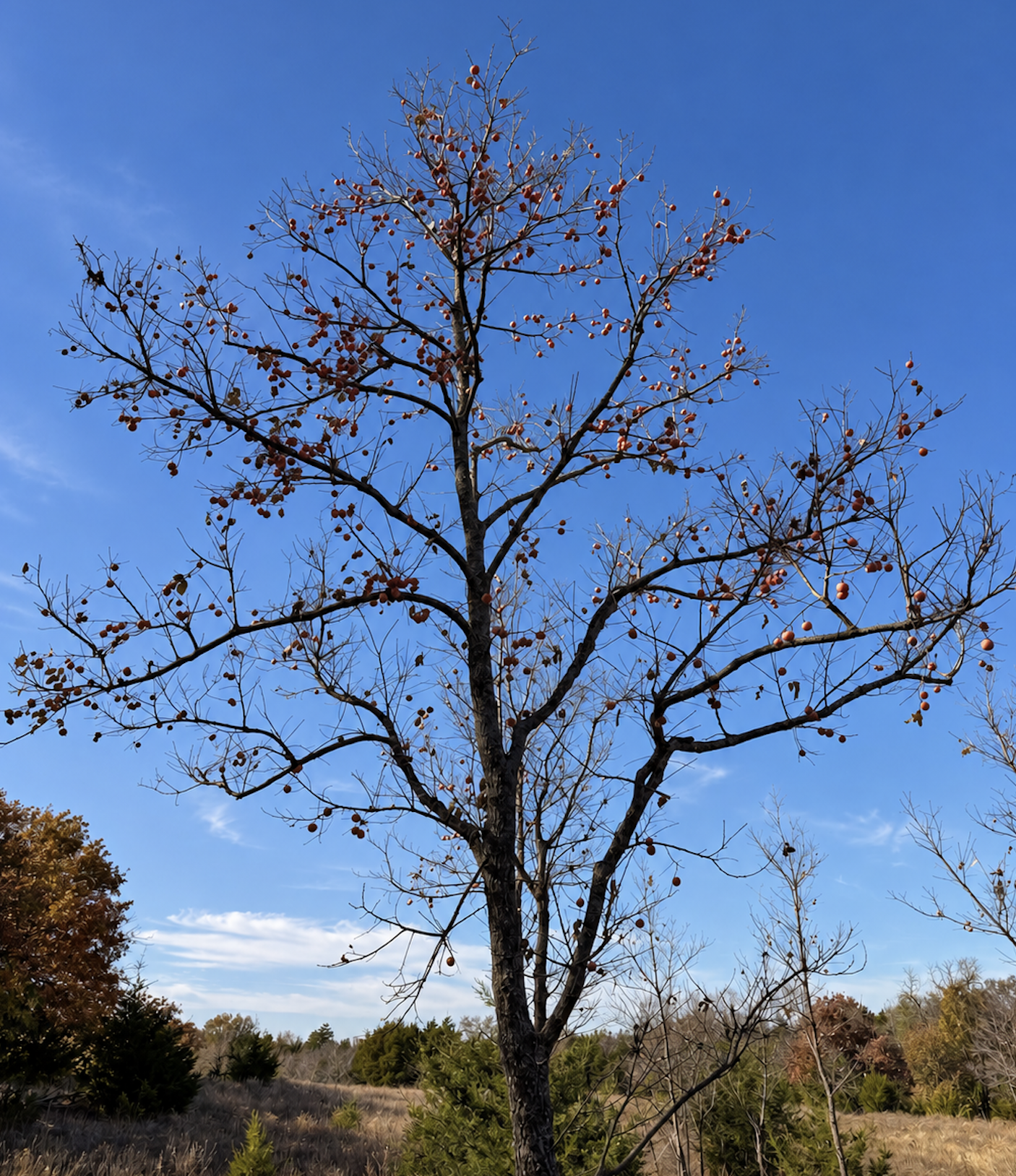
A historically productive oak flat isn't automatically a productive oak flat this year.
We're seeing very few acorns in places that normally produce them. At the same time, our persimmons are loaded.
We're not going to claim the drought caused one to fail while the other succeeded. Mast production is more complicated than that. What matters from a management and hunting perspective is what's actually available right now.
If the oak flat you've hunted for five years doesn't have acorns but the nearby persimmons are loaded with fruit, history shouldn't determine where you hunt.
The same goes for the clover plot that burned up, the creek crossing without water or the camera location that suddenly went cold.
The food source that mattered last October may not be the food source that matters this October.
Creating Stability When Mother Nature Doesn't
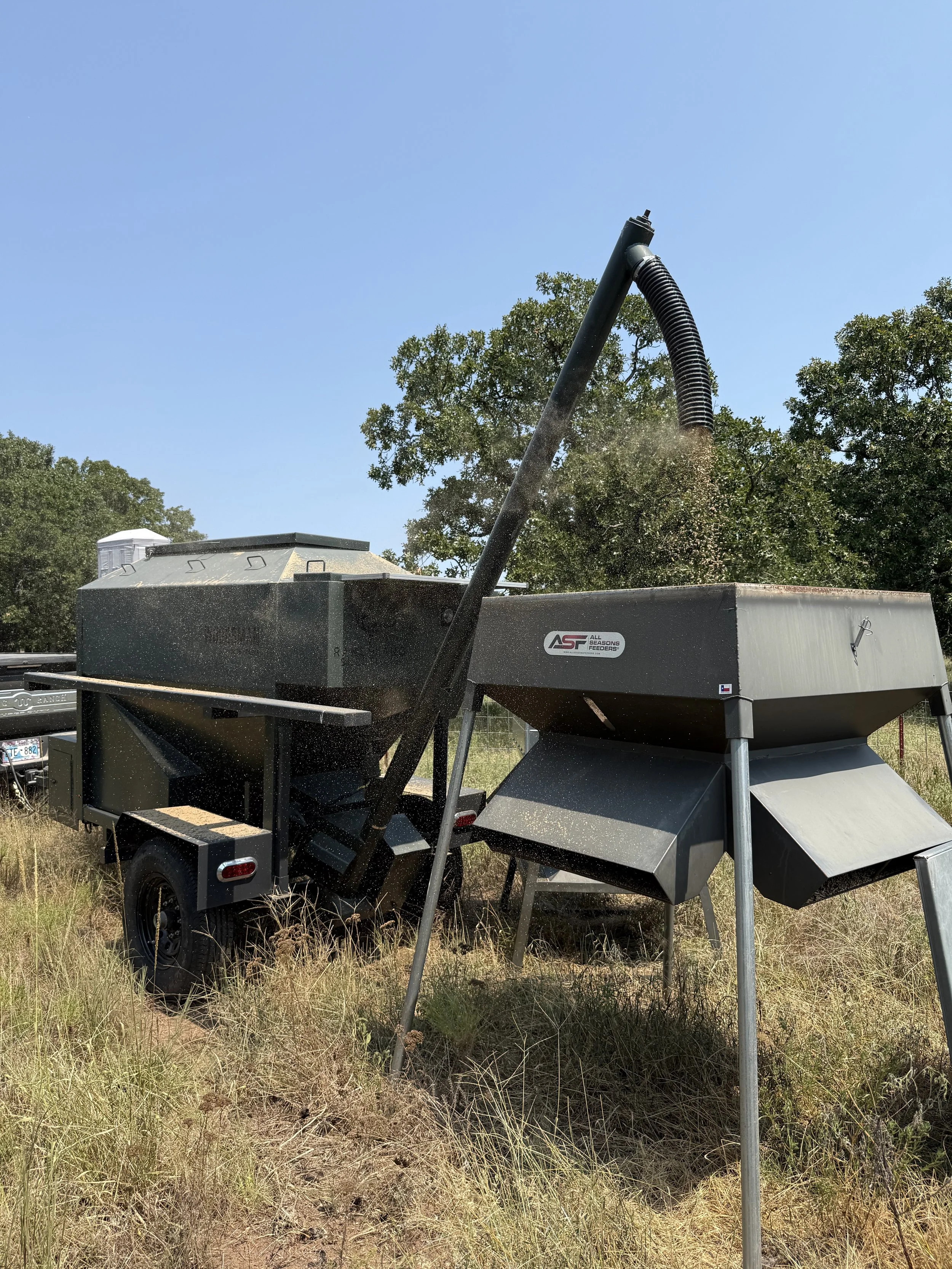
This is also why supplemental nutrition is part of our year-round management program. Our philosophy is pretty simple: maximize what the habitat can provide first, then maintain another nutritional resource for the times when natural forage falls short.
Where legal and appropriate, we feed Garland Animal Wellness 16% protein pellets throughout the year. Antlers are part of that conversation, but our goal is to support the whole herd: growing fawns, does meeting the demands of lactation, and deer getting through periods when quality forage is limited.
There’s some compelling research behind that approach. The nine-year Comanche–Faith study in South Texas, involving Texas A&M–Kingsville’s Caesar Kleberg Wildlife Research Institute, compared deer with and without supplemental pellets in approximately 200-acre fenced enclosures on two ranches. A report of researcher David Hewitt’s presentation described supplemented bucks as roughly 37 pounds heavier and 17 inches higher in Boone and Crockett antler scorethan bucks without supplementation. Those are substantial differences. (Research summary)
That doesn’t mean putting a feeder on an Oklahoma property adds 17 inches to every buck. Those results came from a particular environment and management setup. And one finding is especially relevant after a summer like ours: supplemental feed did not eliminate the effects of dry years. Antler size, fawn-to-doe ratios and population growth still fluctuated with rainfall. (Research summary)
To me, that helps define what we’re trying to accomplish. We can’t control the rain, but we can keep an additional source of nutrition available when Mother Nature turns harsh. We’re creating consistency in one part of the food supply, not removing every nutritional challenge deer face.
This summer, we’ve noticed deer using our supplemental feed earlier and harder than we’re accustomed to seeing. Based on consumption, our rough estimate is that we’re going through 10–20% more feed than normal. That’s an observation from our properties, not a controlled experiment, and we can’t say drought caused the increase.
The feed didn’t necessarily get better. Everything around it may have gotten worse.
That’s why habitat remains the foundation. Maintaining diverse native forage, managing deer numbers and protecting secure cover still matter, whether there’s a feeder on the property or not. Supplemental nutrition is one tool within that larger management plan.
Water: Put It Where It Matters
Water is the obvious drought conversation, but we're starting to think about it a little differently.
Interestingly, our ponds haven't dropped nearly as dramatically as we expected. Our creek beds, however, went completely dry. We've also observed deer using ponds earlier than we're accustomed to seeing.
Again, that's an observation, not proof of a drought-driven behavior change.
But it has made us think harder about dependable water as part of the overall property design.
We don't want to add water simply so we can say a property has another water source.
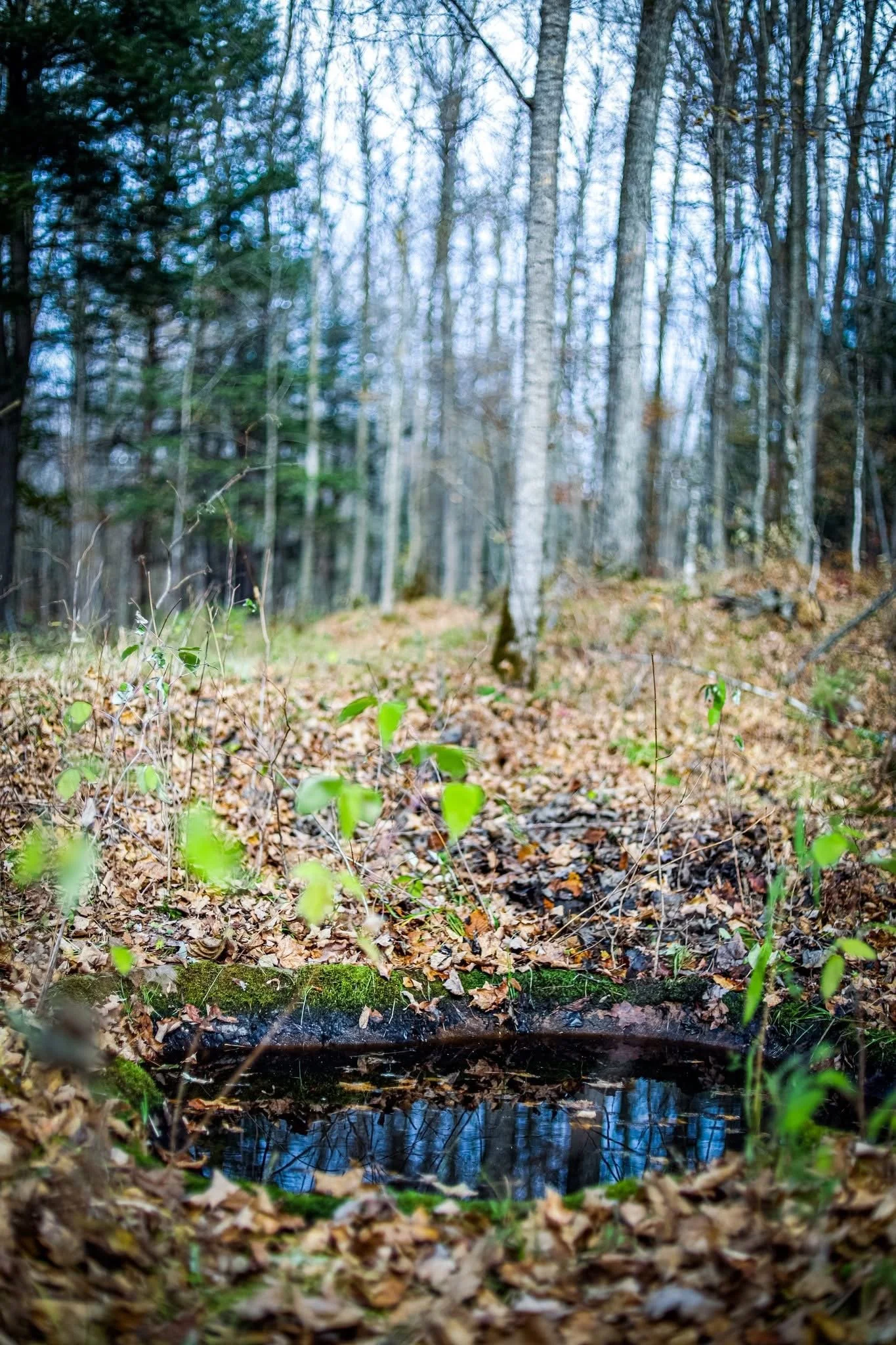
We want water where it improves the way deer can use the property.
That's one reason we've recently started working with Earth Ponds.
What interests us isn't simply creating more water. It's being able to establish a small, dependable water source in a specific location where digging a traditional pond may not make sense.
Our first locations will focus on travel corridors we've already identified between bedding sanctuary areas and destination food sources. Several also have established mineral sites and scrape activity nearby.
The part we're most excited about is that we've had cameras monitoring several of these locations for more than four years.
That gives us a baseline.
We'll put cameras directly on the new water sources and compare utilization, time of day and mature-buck activity against years of historical data.
We don't know what the result will be.
That's the point. We're going to test it.
We're interested in putting dependable water within travel systems deer are already using.
On larger food plots, there's another application we're interested in testing. A deer entering a two-acre plot 120 yards from a blind doesn't do a bowhunter much good. If strategically placed water gives deer another reason to use a particular portion of that plot, it could make a large destination plot more huntable.
Could.
We're not going to tell you it works before we've tested it.
We'll put cameras on it and show you what happens.
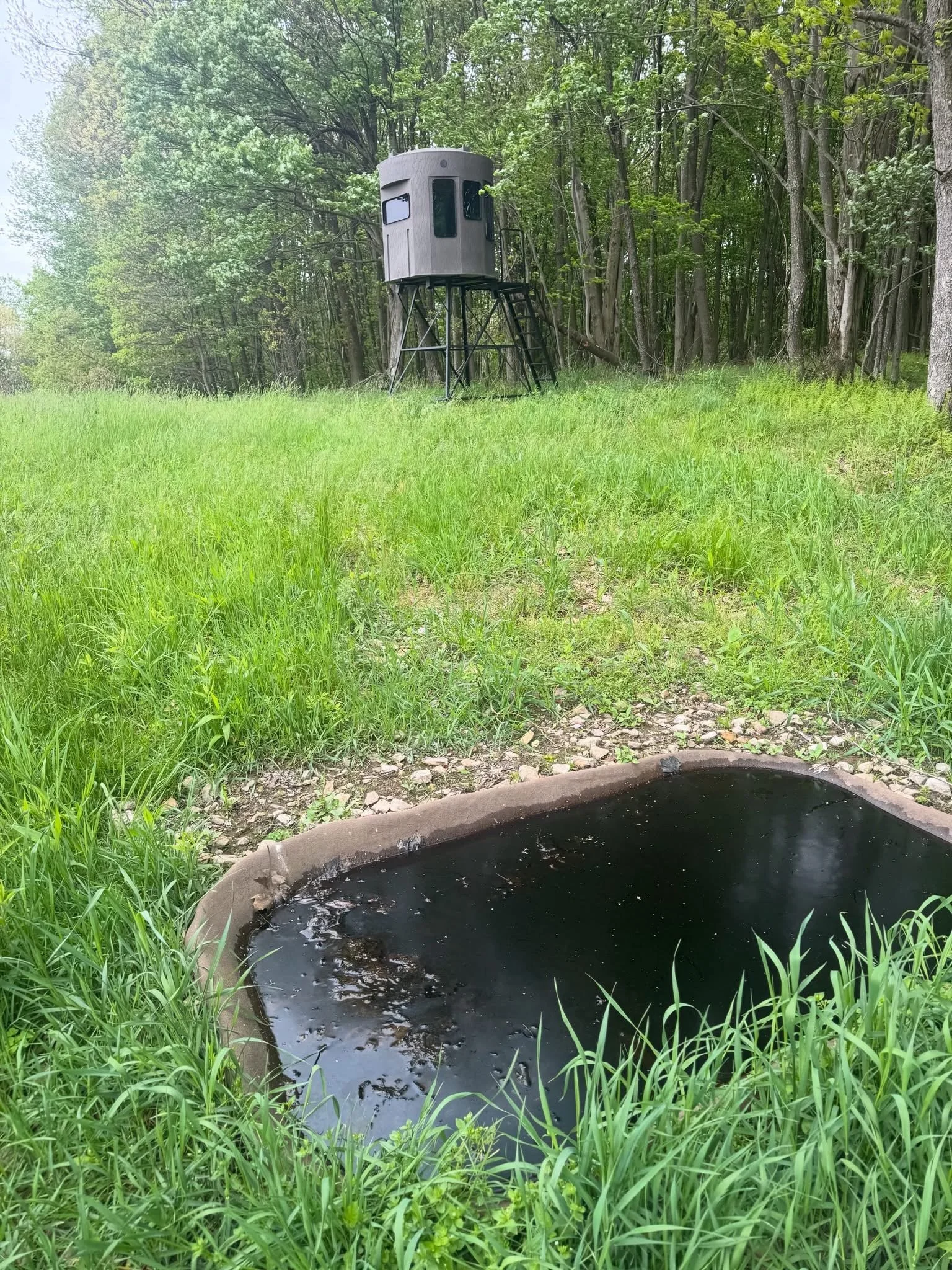
Food, cover, water and hunting access all become more valuable when they're considered as parts of the same system.
See the Earth Ponds we're using →
Don't Hunt Last Year's Pattern
Then September rain changed the property again.
Our plots began germinating. Native vegetation responded. Temperatures moderated. And we've observed both increased deer movement and earlier movement as conditions improved.
It's another reminder that deer aren't following the pattern we drew up for them in July.
Hunters are creatures of habit. We remember the oak flat where deer piled in last October, the creek crossing that always produced and the camera that always had the best bucks.
History is valuable.
But it can also become a trap.
This year, some of our historically productive oak areas appear considerably less attractive. Meanwhile, persimmons are loaded. Supplemental-feed use increased earlier than normal. Creek beds dried up. New plots are emerging. September rain changed conditions again.
That's a different resource map.
Don't hunt last year's pattern on this year's habitat.
The Whitetail RX Prescription
After a summer like this, we'd start by scouting the food again. Don't assume last year's mast locations are producing. Pay close attention when walking to and from early season observation stands to find the individual trees carrying food.
Plant conditions, not dates. Know the establishment requirements of what you're planting, but don't force seed into bad conditions just because the calendar says it's time.
Diversify the system. Native habitat, planted forage, dependable water, security cover and—where legal and appropriate—supplemental nutrition can each provide something different.
Think strategically about water. Don't just ask where you can put it. Ask where it fits into the bedding, security, travel and feeding system deer are already using.
And above everything else, we'd keep looking.
Trail cameras tell us a lot. History tells us a lot. Research tells us a lot.
But eventually you have to walk outside and look at what's actually happening.
Manage what's in front of you.
Building a More Resilient Whitetail Property
We can't make it rain.
We can't make an oak produce acorns. We can't guarantee a food plot succeeds or that a mature buck follows the same pattern he did last year.
But good management isn't about controlling every variable.
It's about stabilizing as many variables as possible to create more predictable results.
Improve the native habitat. Give a plot the best opportunity to establish. Maintain quality nutrition when Mother Nature doesn't. Put dependable water where the property needs it. Protect security cover.
Then pay attention when conditions change.
We can't drought-proof a whitetail property.
But we can build one that's a hell of a lot more resilient.
Put water where the deer want to be.
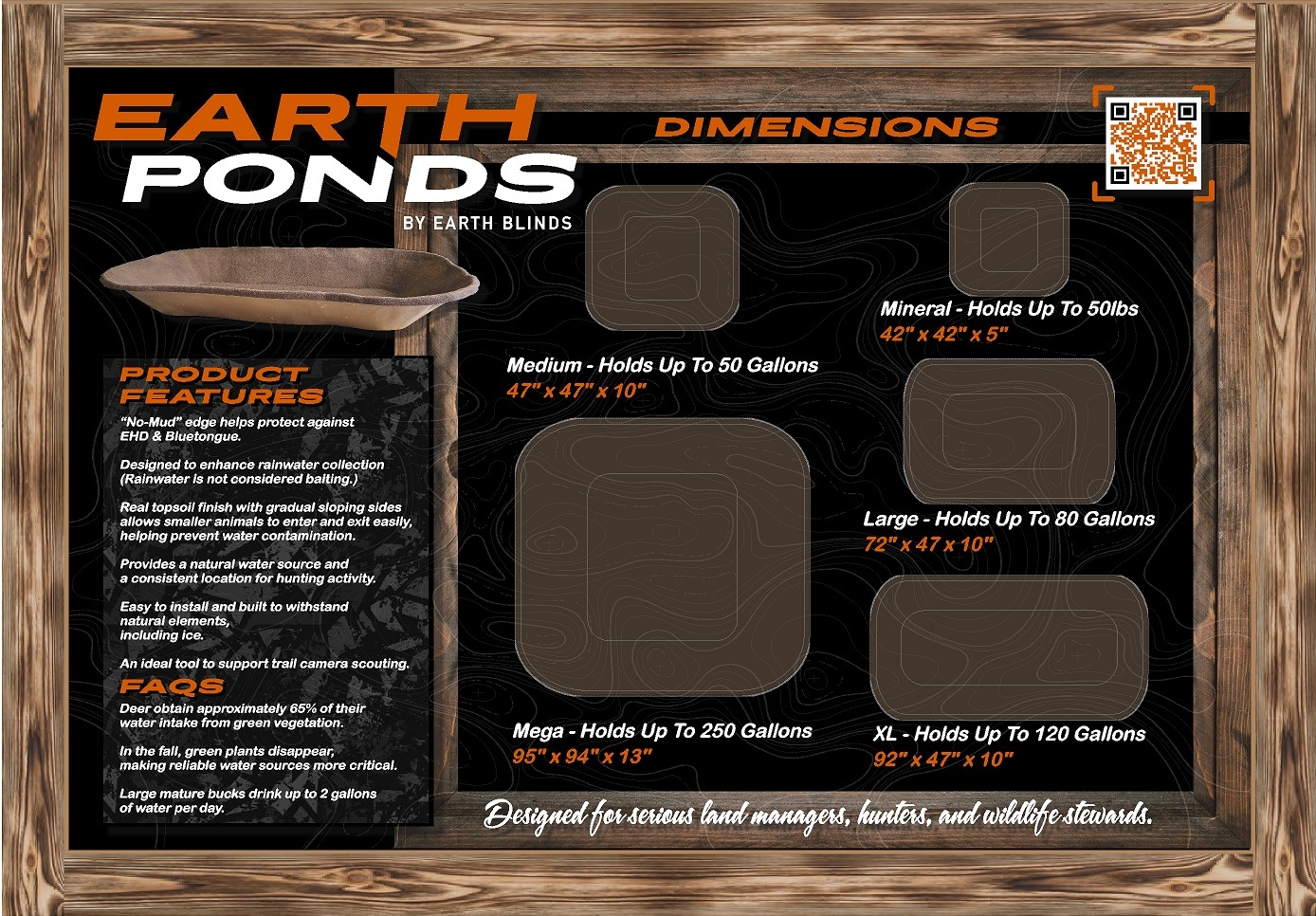
Water is one of the most overlooked pieces of a whitetail property. Earth Ponds give landowners a simple way to establish a dedicated water source exactly where it can have the biggest impact—near bedding areas, along travel corridors, around food plots, or close to a stand location.
Designed to be installed in the ground and blend naturally into the surrounding habitat, an Earth Pond creates the look and feel of a small natural water hole without requiring a traditional pond. Once installed and finished with native soil, rock, and vegetation, it becomes part of the landscape.
For properties where dependable water is limited—or simply isn't located where you need it—Earth Ponds give you another tool to help shape how deer use your property.
Why we like them:
Creates a dedicated water source in strategic locations
Great for bedding areas, travel corridors and food plots
Helps add another reason for deer to spend time on your property
Can be positioned near stand locations to create additional hunting opportunities
Low-profile design blends naturally into the habitat
Simple installation compared with building a conventional pond
Useful for deer and other wildlife
Whitetail RX Take: Food gets most of the attention in habitat management, but water can be just as strategic. Put food, cover and water in the right places, and you start giving deer fewer reasons to leave.
Hunt More. Live Better.
Manufacturer Warranty: 100% Lifetime Warranty
References
Oklahoma Mesonet — Relentless Heat, Scant Rainfall Send Drought Surging Statewide
Oklahoma State University Extension — White-Tailed Deer
Oklahoma State University Extension — A Practical Guide to Food Plots in the Southern Great Plains
Oklahoma State University Extension — Managing Deer Damage to Crop Fields in Oklahoma
Colleen Schreiber, Livestock Weekly (2020). “Supplemental Feed Helps Deer Nutrition, But It’s Complicated.” Published on the Caesar Kleberg Wildlife Research Institute website.