
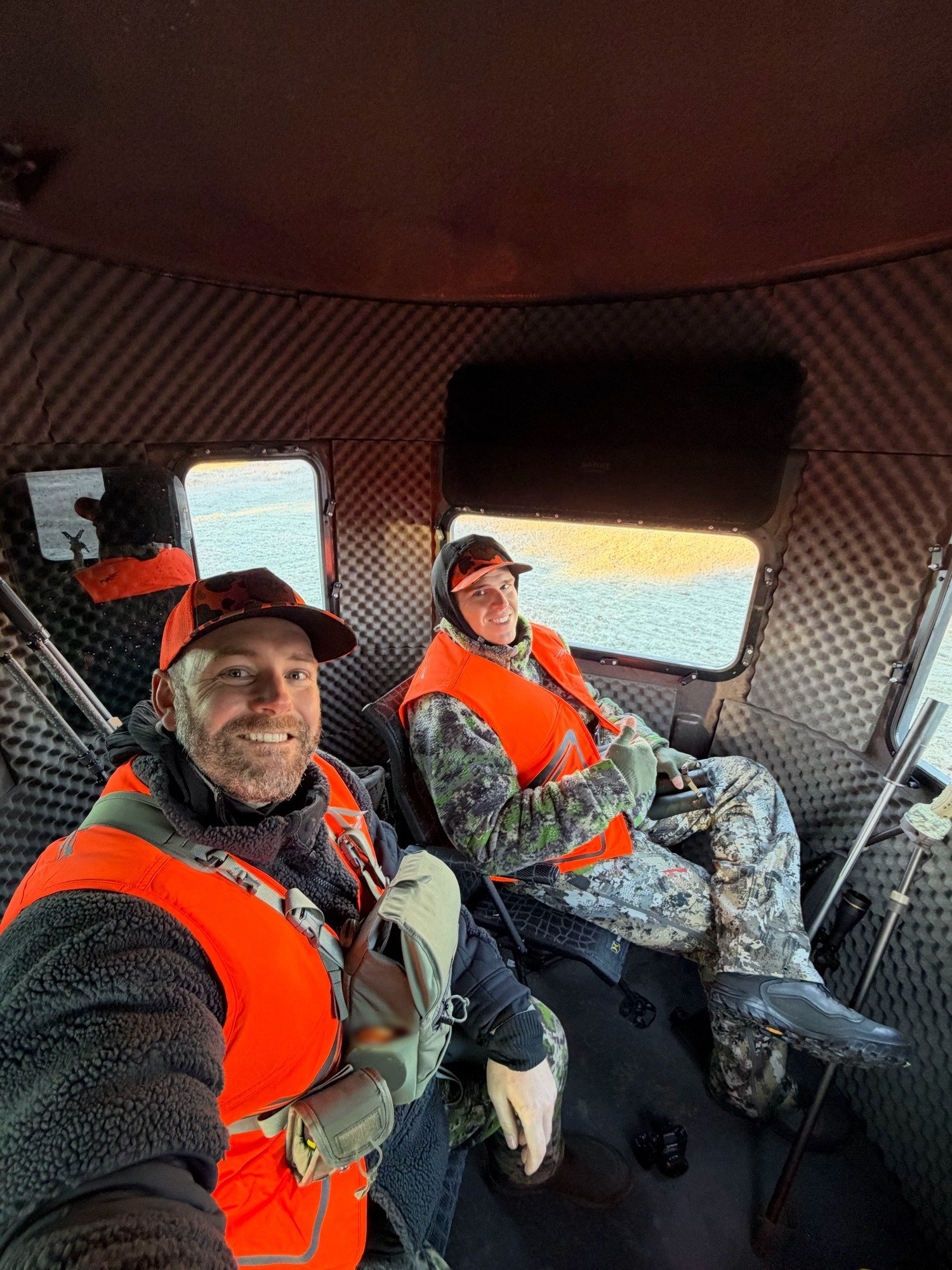
Every year somebody in Oklahoma kills a good deer on a 68-degree afternoon, takes pictures for half an hour, drives around to show a buddy, and hangs him in the barn overnight. Then he wonders why the backstrap tastes like the barn.
Gun season opened Saturday. Thanksgiving is Thursday. In this part of the country that can mean a frost in the morning and shirt sleeves by two o'clock. The deer doesn't care how hard you worked for him. The minute he's down, the meat is on a clock, and the clock runs faster every degree above 40.
This is the KitchenRx desk, so here's how we take a deer from the ground to the freezer on Oklahoma dirt: clean, cold and legal.
The short version
40 degrees is the line. Above it, bacteria grow fast. Get the meat to 40 or below, and get there quick.
Field dress right away, open him up and keep the cavity dry and out of the sun.
Check him in within 24 hours of leaving the hunt area, before you process him.
Ice it, but keep it dry. Ice in bags, meat out of the melt water.
Don't hang a deer in a warm barn. If it isn't 40 or below, quarter him and get him on ice.
Know the CWD rules if you hunt the Panhandle or bring a deer home from another state.
The number that matters: 40
Food-safety folks keep coming back to one number. Wisconsin's agriculture department puts it plainly: when the air is over 40 degrees, the bacteria that make people sick grow quickly. Their target is to chill the surface of the carcass to 40 or lower within 24 hours. Penn State Extension says to cool the carcass to 35 to 40 degrees as quickly as you can.
Twenty-four hours is the outside edge, not the goal. On a warm afternoon the inside of a big-bodied buck holds heat for a long time, especially the hindquarters, where the meat is thickest. We don't try to see how close we can cut it. We try to beat it by a lot.
KitchenRx #1: The first hour
What you do in the first hour decides most of what ends up on the plate.
Tag him first. Oklahoma requires you to attach a field tag to the carcass right away, with your name, customer ID number and the date and time of harvest.
Get the pictures, then get to work. Take your photos, score & age him, and then get the knife out. Not an hour later.
Field dress right away. Both Penn State and Wisconsin say to dress the deer as soon as possible. Heat leaves through an open cavity much faster than through a hide.
Prop the ribs open. Wisconsin's guide says to spread the rib cage so air moves through and the carcass cools faster. A stick works.
Keep it clean and dry. Wipe the cavity out with paper towels. If you rinse it with water, dry it quickly. Wet meat spoils faster than dry meat.
Keep him out of the sun. Don't let him ride across the hood or bake in a truck bed in the sun. Shade and moving air, every minute you can.
KitchenRx #2: Check him in before you cut him up
Oklahoma requires every deer to be checked within 24 hours of leaving the hunt area and before you process the carcass. You can do it on the Go Outdoors Oklahoma app, online at GoOutdoorsOklahoma.com, or with a Department employee. Your confirmation number stays with the carcass.
If you need to quarter him in the field to get him cold, you can. The regulations allow a deer to be checked in quartered, as long as the sex organs stay naturally attached and the head goes with the carcass. That's worth knowing on a warm afternoon when the processor is closed for the holiday.
KitchenRx #3: Ice it, but keep it dry
Most of us don't have a walk-in cooler at the lease. What we have is a truck, a cooler and a bag of ice from the gas station, and that works fine if you do it right.
Quarter him and get him in the cooler. Four quarters, the backstraps and the tenderloins fit in a big cooler a lot easier than a whole deer fits in a refrigerator you don't have.
Bag the ice, or bag the meat. Wisconsin's guide suggests ice or snow sealed in plastic bags when it's over 40 degrees. Meat sitting in a slush of blood and melt water gets soft and gray, and it doesn't keep.
Drain it. Pop the drain or pour off the water every time you check it. We check ours morning and evening.
Keep the cooler in the shade, not in the truck bed in the sun.
If you're cutting him up yourself, Wisconsin's guide says to cut and package the meat in meal-size portions and to limit sawing through bone, especially the spine.
KitchenRx #4: To hang or not to hang
Hanging a deer to age is a great tradition when the weather cooperates. In late November in Oklahoma, it often doesn't.
Hang only if it stays cold. Wisconsin puts proper aging between 32 and 36 degrees, never above 40, and no longer than two weeks. Penn State says to hold the meat at 40 or below for two to three days, at most.
Don't freeze him before rigor sets in. Wisconsin says to hold the carcass at 40 or less but avoid freezing it before rigor.
Burger and sausage don't need aging. Penn State says aging isn't necessary for meat headed to sausage.
A warm barn isn't a cooler. Wisconsin's guide says venison will spoil if it hangs without refrigeration in warm weather. If the overnight low is 50, he goes in the cooler or to the processor, not on the gambrel.
On our ground, most of the time that means quartered and on ice the same evening, and to the processor or the kitchen table within a couple of days.
KitchenRx #5: CWD and moving meat
Chronic wasting disease is in Oklahoma now. The Wildlife Department's timeline lists wild deer that tested positive in Cimarron, Texas and Woodward counties since 2022, plus a hunter-harvested deer near McCurtain County in 2025. The most recent entry is a whitetail found on Sept. 28, 2026, about two miles south of Optima in Texas County, and the Texas County surveillance area was expanded.
What that means for you:
If you hunt the Panhandle or northwest Oklahoma, read the surveillance-area rules before you go. The big game regulations call out Cimarron, Texas, Woodward, Major and Woods County hunters.
If you hunt out of state, you can't bring a whole carcass back into Oklahoma. You can bring quarters with no spinal material, deboned meat, antlers on a clean skull plate or a cleaned skull, cleaned teeth, the hide, finished taxidermy, or a deer headed to a taxidermist in good standing with the state.
Debone near the kill. Oklahoma State University Extension recommends deboning your meat at the kill site or close to it, and moving only deboned meat.
Test if you're in a hot spot. OSU says testing sites are set up in CWD-positive areas, where you turn in the head. And they don't recommend eating meat from an infected deer. Cooking it won't fix it.
KitchenRx #6: Share the extra
If the freezer is full and you've still got a doe tag, Oklahoma has a good answer. Through Hunters Against Hunger, you check in your deer, take it to a participating processor and pay a tax-deductible $10. That covers your part of the processing, and the meat goes to Oklahomans who need it. The Wildlife Department's page lists the participating processors, 41 of them when we checked.
Thanksgiving week is a fine week to do it.
Age him first, and fill the freezer with does
All of this is easier if you're picky about what you shoot. On our ground the goal for bucks is still 5.5 and older, and in gun season a scope makes a swollen-necked 3.5-year-old look like a lot more deer than he is. Legs, belly, neck, then the rack. If you want meat, opening week is a fine time to take a doe. You can find more of why we love this meat in our older KitchenRx post, Success… now what?
Your turn
What's your rule for hanging a deer: a number on the thermometer, a date on the calendar, or never?
Who's the best processor in your county? Tell us the county and why. We'll pass the good ones along.
Gear in this story
Half Rack Waterproof Soft-Sided Cooler (Large, $150). It's leakproof, food safe and fits in the back seat, so a quartered deer can ride home cold without taking over the truck bed. The Large holds up to 92 cans; that's a lot of backstrap.
Whitetail Rx Gift Card ($25 to $100). For the hunter who handed you a cooler of backstrap this year. It works on everything in the Rx Store.
WRx365 Pro members get 5 percent off everything in the Rx Store.
Before you go
When you tag one, check him in, then score & age your deer free in WRx365 at whitetailrxtools.com and log him in your Harvest Registry. He goes into your season summary on January 20. (Scores and ages are estimates, not official Boone & Crockett or Cy Curtis scores.) And join the free Hunt Club for next week's Field Notes.
Read the regulations yourself before you go. The Wildlife Department's site is the final word.
Sources
Wisconsin DATCP, "Caring for Venison in Warm Weather" (over 40 degrees, bacteria grow quickly; chill the surface to 40 or lower within 24 hours; spread the ribs; ice sealed in bags; age at 32 to 36 degrees, never above 40, no more than two weeks; don't freeze before rigor)
Penn State Extension, "Proper Care and Handling of Venison from Field to Table" (dress as soon as possible; cool to 35 to 40 degrees quickly; hold at 40 or below for two to three days at most; sausage meat needs no aging)
ODWC Big Game Regulations (field tag; check-in within 24 hours before processing; quartered check-in rules; cervid import rules; SSA counties)
ODWC Deer Big Game Season (gun season Nov. 21 to Dec. 6, 2026)
ODWC Chronic Wasting Disease (Oklahoma CWD timeline through Sept. 28, 2026; carcass import exceptions)
Oklahoma State University, "Chronic wasting disease is in Oklahoma" (debone near the kill; testing sites in positive areas; don't eat meat from an infected deer)
ODWC Hunters Against Hunger ($10 tax-deductible donation; participating processors)