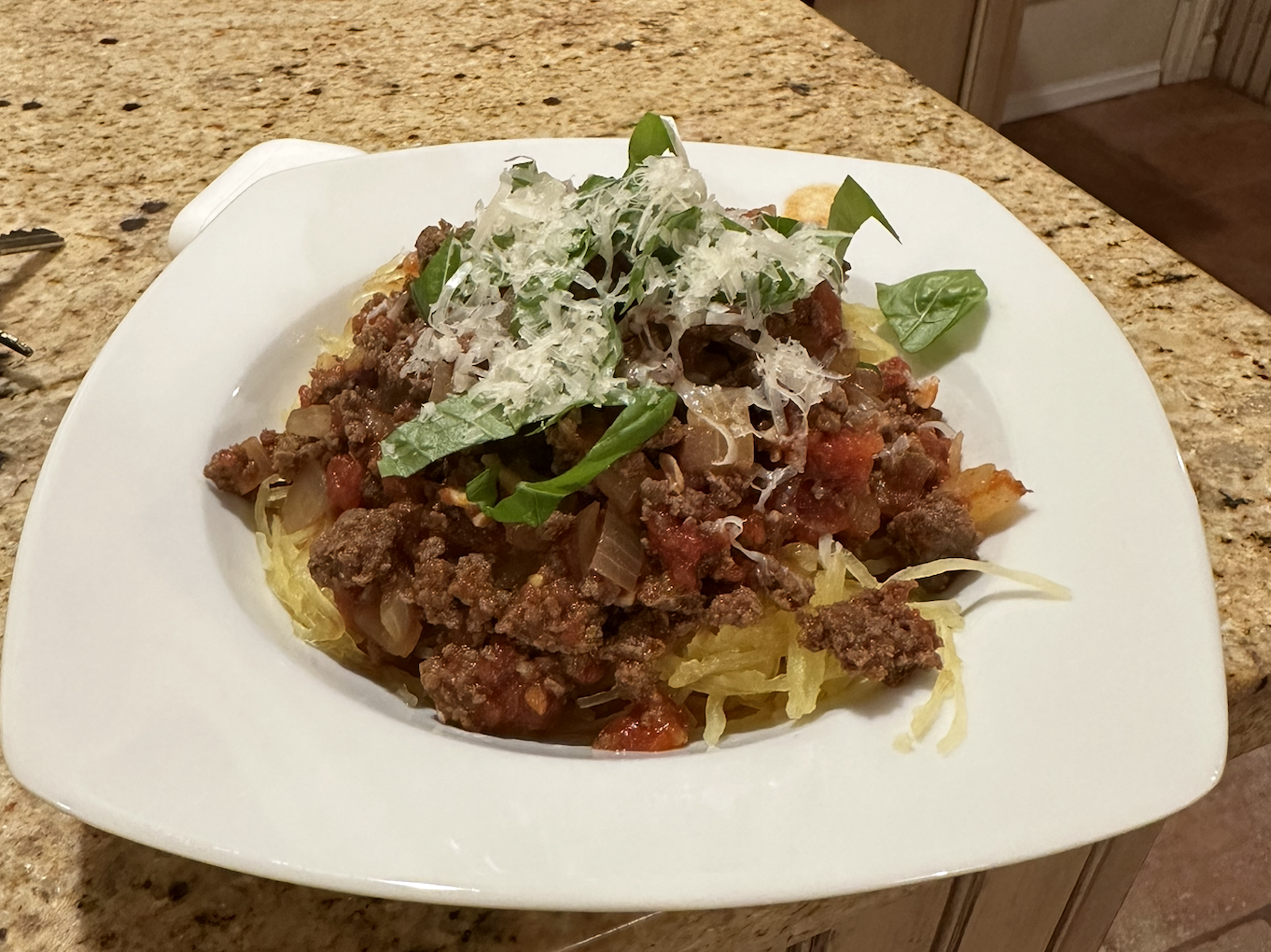
The Perfect Venison Red Sauce
KitchenRX · about a 6-minute read
Every deer season leaves a freezer full of ground venison and the same question: what do we make with it that everyone will actually eat? This is our answer. It's a red sauce, it takes about 45 minutes, and it's the one I make when I want someone who "doesn't like deer meat" to go back for seconds.
I didn't invent it. A chef friend taught it to me over Zoom in the middle of COVID, and the way he taught it changed how I cook everything else.
A cooking class that came out of a hard year
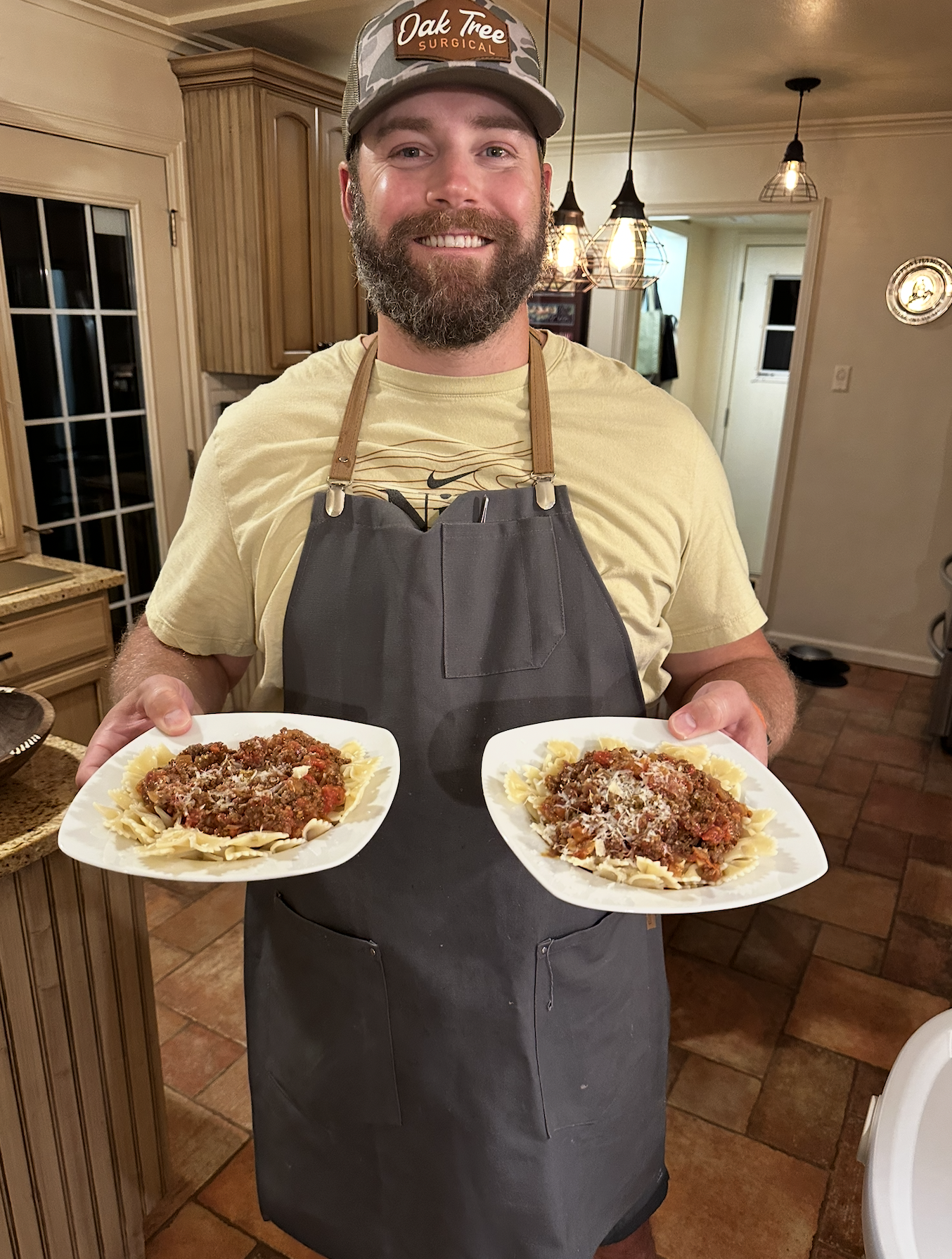
The first time I made it, the night of Colin's class. Still the same sauce.
Colin Sato is one of the original chefs of Et Al., the Tulsa chef collective that built a following with pop-ups like Dumpling Night. This year the group opened its first permanent restaurant, Natsukashii, an all-day homestyle Japanese spot on North Cheyenne in the Arts District, where Colin is the savory director and a co-owner. Before he cooked for a living, he taught math and computer programming, and it shows: he explains food the way a good teacher explains anything.
We've known Colin for years, back to when my wife was teaching pre-K in downtown Tulsa with Teach For America. When COVID shut down dining rooms and pop-ups with them, a group of Et Al. regulars chipped in to help the team get through it. Colin paid it back the best way a chef can: a virtual cooking class.
For about six weeks we cooked our way through Samin Nosrat's book Salt, Fat, Acid, Heat. The idea is simple. Nearly every good dish comes down to getting four things right: salt, fat, acid and heat. Learn to taste for them and you stop needing exact recipes.
One of the first things he taught us was his red sauce. By the end of the class each of us built our own dish on those principles. This venison version is mine.
Why a red sauce is the perfect teacher
A red sauce touches all four elements in one pan, and it forgives mistakes.
Heat is the browning. Seared venison, onions cooked until they turn brown and sweet, garlic toasted just to golden. That's where the deep flavor comes from.
Acid comes built in from the tomatoes. San Marzanos bring a bright, rounded acidity that cuts through rich meat.
Salt is the volume knob. Colin's line stuck with me: salt is like turning up the volume on your favorite song. Same song, you just finally hear all of it.
Fat carries flavor and gives the sauce its body. Venison is lean, so the olive oil does work that beef fat would do in a regular meat sauce.
Then there's the secret: a teaspoon of soy sauce. It doesn't make the sauce taste like soy. It adds umami, that savory, mouth-filling depth, and it's the reason people ask what's in it.
Where the meat came from
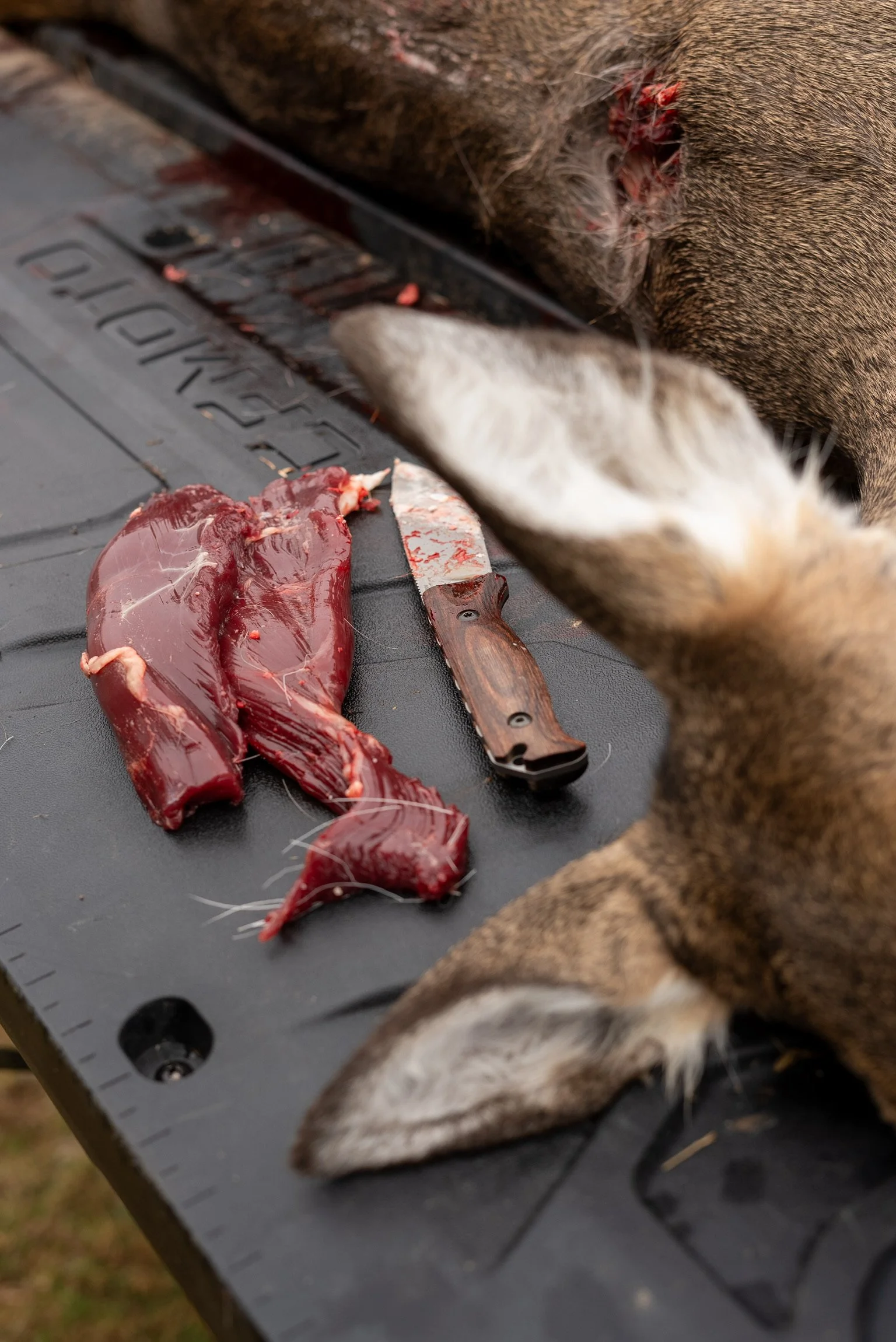
The venison in this batch came from a doe. On most Oklahoma places, taking does is part of good management. It keeps the herd in balance with the habitat, and it fills the freezer with the lean, mild meat that makes a sauce like this shine.
Good sauce starts in the field. Get the deer cooled fast, keep the meat clean and cold, and trim the silver skin and fat before grinding. Most of what people call "gamey" is warm meat or tallow, not the deer.
How it comes together
The full recipe card is below. Here's the short version, the way Colin taught it.
Start the pasta water and salt it until it tastes like the sea. That's the first place salt shows up, and it seasons the pasta from the inside.
Salt and pepper the venison and brown it hard, then pull it out of the pan. Pour olive oil into the same pan and cook a big diced onion until it's brown and sweet. Push the onions aside, toast the garlic in the middle, and don't walk away, because garlic goes from golden to bitter fast.
Pour in a can of whole San Marzano tomatoes, then put the venison back in. Add most of the basil and crush the tomatoes with your spoon. Let it bubble down until it's the thickness you like.
Now comes the part that makes it a lesson and not just a recipe. Taste it. It will probably taste flat, and that's fine. Add salt a pinch at a time and taste again until the flavor pops. Then add olive oil until you see a light sheen on top. Then one teaspoon of soy sauce. Taste once more and make sure the salt, the richness and the savory depth are all in balance. Stir in a handful of Parmesan.
Serve it over the pasta with fresh Parmesan and the last of the basil on top. We've served it over bowties and over roasted spaghetti squash, and it's good both ways.
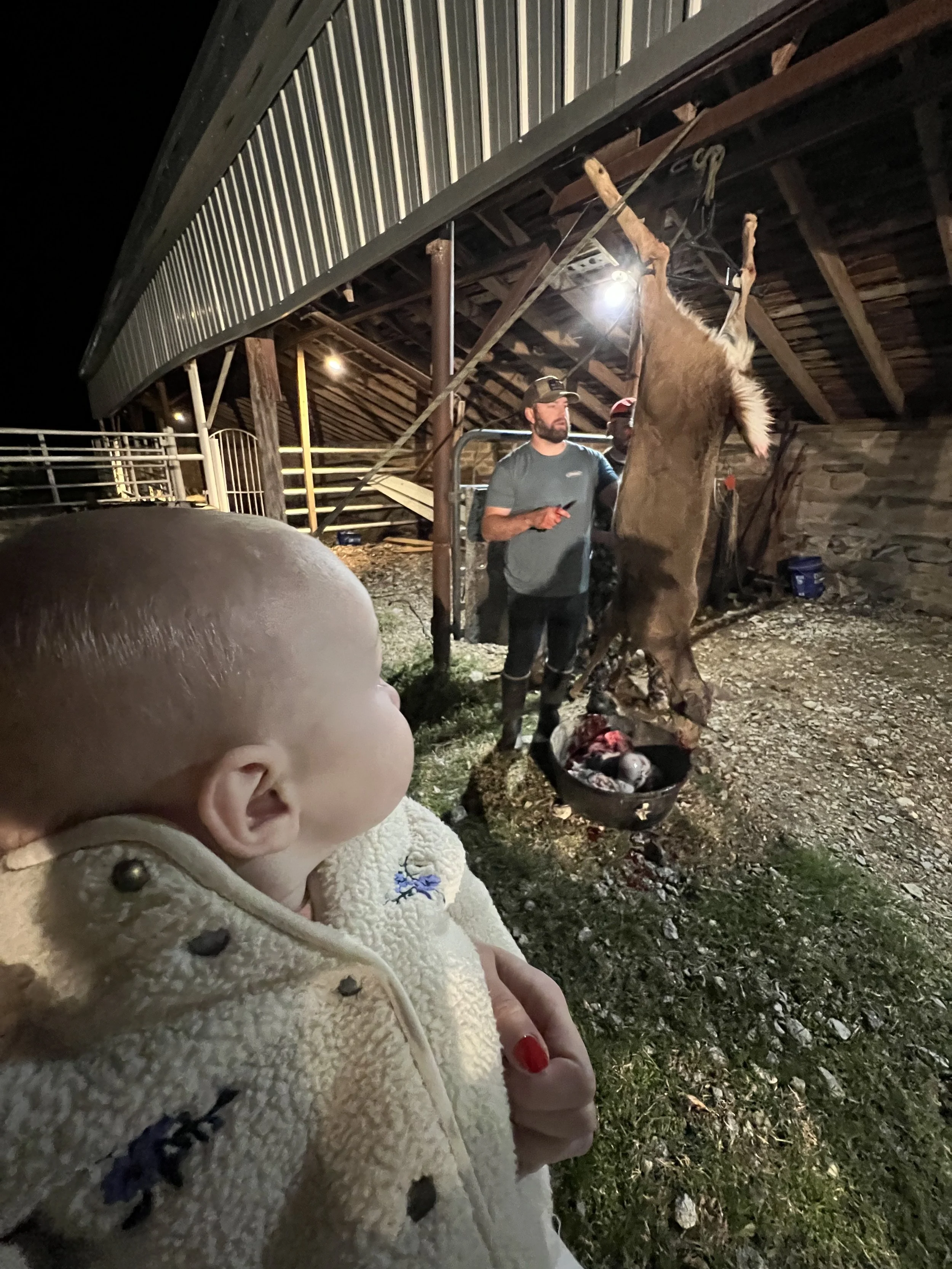
Family doe weekend 2024
What it taught me
The best thing Colin gave us wasn't the recipe. It was the habit of tasting and asking which of the four is missing. Too flat? Salt. Too sharp? A little fat. Heavy and dull? A squeeze of acid. Once you cook that way, every pound of venison in the freezer turns into an easy dinner.
If you're in Tulsa, go eat at Natsukashii and tell Colin the deer guys sent you.
Your turn
What's your go-to for ground venison? Tell us your family's favorite in the comments.
Have you ever put soy sauce in a red sauce? Tell us if it converts you.
Before you go
If you tag a doe this season, put it in the Harvest Registry on the free Score & Age Tool. Tooth-age it and it goes into your season summary on January 20 (age estimates, not official scores). And if you want the next KitchenRX recipe in your inbox, join the free Hunt Club.
Recipe card
The Perfect Venison Red Sauce · Serves 4–6 · Prep 15 min · Cook 35 min · Adapted from a recipe taught by Chef Colin Sato (Et Al. / Natsukashii, Tulsa)
Ingredients
1 lb ground venison
1 large white onion, diced
3 cloves garlic, finely diced
1 can (28 oz) whole San Marzano tomatoes
½ cup fresh basil leaves, loosely packed, about 15–20 leaves (¾ for the sauce, ¼ chopped for the top)
2 tbsp olive oil for the onions, plus about 1 tbsp to finish
1 tsp soy sauce
½ cup grated Parmesan, plus more for serving
Salt (start with ½ tsp on the venison, then season to taste) and black pepper
1 lb pasta of your choice (or a roasted spaghetti squash)
Steps
Salt the water. Bring a big pot of water to a boil and salt it until it tastes like the sea. Cook the pasta to al dente and drain.
Brown the venison. Season the venison with salt and pepper and brown it well in a large pan over medium-high heat. Ground venison is done at 160°F. Move it to a plate.
Onions low and slow. Add olive oil to the same pan and cook the onion until it's brown and sweet, about 10–15 minutes.
Toast the garlic. Clear a spot in the middle of the pan and cook the garlic until just golden, about 1 minute. Don't let it burn.
Tomatoes, basil, venison. Pour in the tomatoes, then return the venison to the pan. Add ¾ of the basil and crush the tomatoes with your spoon. Simmer until it's as thick as you like, 15–20 minutes.
Taste: salt. It'll probably taste flat. Add salt a pinch at a time, tasting as you go, until the flavor turns up.
Taste: fat. Stir in olive oil until you see a light sheen on the sauce.
Taste: umami. Stir in 1 teaspoon of soy sauce. Taste again and balance the salt, the richness and the savory depth.
Cheese. Stir in the Parmesan.
Serve. Spoon over the pasta and top with fresh Parmesan and the rest of the basil, chopped.