
Scrapes, Rubs and the Smokepole Week
Somewhere around the third week of October, the woods start talking. A patch of bare dirt shows up under a low cedar limb on the edge of a plot. A thigh-thick sapling gets peeled down to the white wood. Your cameras start catching bucks on their feet that you haven't seen since velvet.
That's also when Oklahoma hands out the smokepole. Muzzleloader season runs Saturday, October 24, through Sunday, November 1. Last season, 70,537 muzzleloader hunters took 15,636 deer in those nine days, up from 10,580 the year before.
It's a short season with a lot of sign in the woods, so it pays to know what the sign actually means. Some of it means less than we'd like to think. Some of it is the best information you'll get all fall.
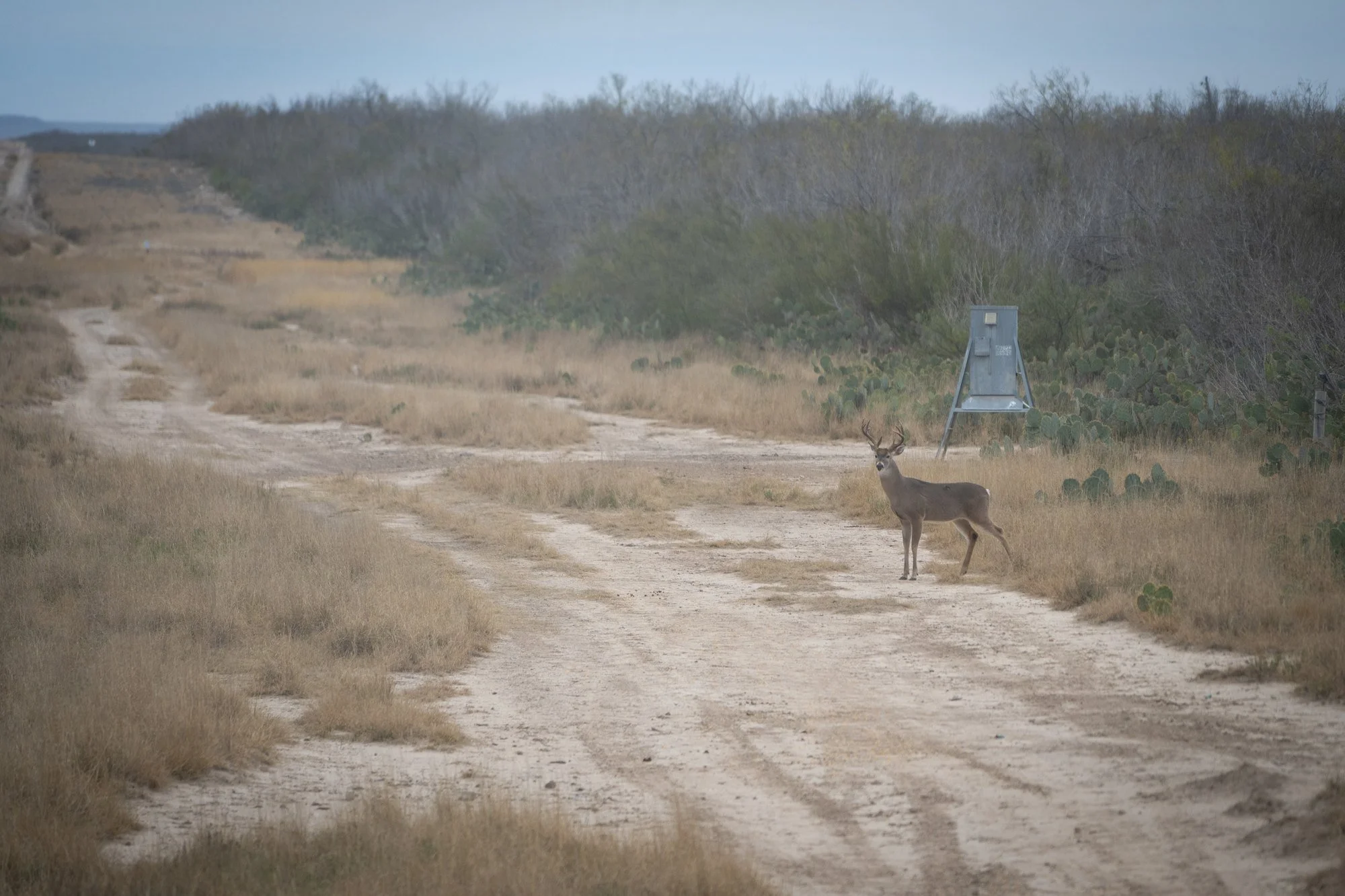
What a scrape really is
A scrape is a buck's bulletin board. He paws a patch of ground bare, usually under an overhanging branch, and works that branch with his forehead, eyes and mouth. Often he'll urinate over the glands on his hind legs so the scent runs into the dirt.
The branch matters more than the dirt. In a Tennessee study that put cameras on 107 scrapes, touching the overhanging branch was the most common thing bucks, does and fawns all did there. A Nebraska camera study found adult bucks smelled the branch on 70 percent of visits and actually pawed the ground on only 36 percent.
And it isn't a buck-only club. In Tennessee, bucks made 73 percent of the interactions, but does made 23 percent and fawns 4 percent. Does work the branch too. They just don't do the rub-urinating that bucks do.
Think of a scrape less as a buck's private property and more as the community message board. That's useful, because a scrape the whole neighborhood checks is a good place to find out who lives there.
The night-shift problem
Here's the part that keeps scrape-hunting honest. In that Tennessee study, 67 percent of scrape visits came at night. Bucks 4.5 years and older were the worst of all: only 16 percent of their visits came in daylight, the lowest of any group. Fawns, for what it's worth, were the most likely to show up while you could see them.
Older work found the same thing. Georgia researchers reported most buck visits after dark, and other camera surveys have put the night share at 90 percent or more.
It does happen. Last fall, the camera on a scrape next to one of our stands caught bucks working it on four different mornings, all between 7 and 9 a.m. It just isn't the rule.
So if your plan for the smokepole opener is to sit over a scrape and wait for the big one to walk in at noon, the odds aren't great. The scrape tells you he's in the neighborhood. It doesn't tell you where he'll be at 7:15 on Saturday morning.
The Tennessee visits peaked in the first half of November, just ahead of the rut. In Oklahoma, ODWC biologists put peak breeding in the central part of the state around mid-November. That makes the muzzleloader week the warm-up: scrapes are opening and getting checked, and bucks are starting to travel, but most of the daylight chasing is still a couple of weeks off.
Rubs tell you who
If scrapes are a bulletin board, rubs are a signature. A buck rubs to strip velvet, to strengthen his neck and to leave scent from his forehead glands on the bark.
Older bucks rub a lot more. The National Deer Association cites University of Georgia work estimating a mature buck can make 1,000 to 1,200 rubs a year, and says a herd with older bucks can leave more than 3,000 rubs per square mile, compared with 400 to 500 where young bucks dominate.
Our read of rub sign on Oklahoma ground:
Big trees, rubbed high, matter more than many small ones. A cedar or post oak the size of your leg, torn up at knee height and above, usually wasn't done by a yearling.
A line beats a single rub. Three or four fresh rubs in a row along a creek edge or field corner show you a travel route. A lone rub shows you a moment.
Read which side is rubbed. The torn side usually faces the direction he was coming from, which tells you which way he was walking.
Fresh means wet and white. Shavings on the ground and sap in the wood. Gray, dry wood is old news.
Does pay attention to this sign too. Researchers who walked tame does past rubs found they reacted to 59 percent of rubs less than two days old, mostly by sniffing and licking them.
Put a camera on it, the right way
The best thing you can do with a hot scrape is learn from it without making it cold. That's a job for a cellular camera.
Hang it once, then leave it alone. Every walk-in to pull a card puts your scent on the very spot you're trying to read. A Tactacam Reveal sends the pictures to your phone, so you check it from the house.
Mount it off to the side, 15 to 20 feet away, about chest high. A tree mount lets you aim it and lock it. Angle it so it covers the branch and the dirt, not just the dirt.
Run video if you can. A 10-second clip shows you which buck worked the branch, which way he came from and which way he left. Direction of travel is the whole point.
Watch the time stamps, not the count. If a buck you want hits the scrape at 6:40 a.m. two days in a row, that's worth a sit. If he's always there at 2 a.m., back off and hunt between his bed and that scrape instead.
Hunt between the bed and the sign
Since mature bucks work scrapes mostly in the dark, we don't sit on top of them. We sit where he travels in daylight on his way to them.
Find the cluster. One scrape is a dot. Three or four scrapes and a rub line along the same edge is a road.
Back up toward the bedding cover. Walk the line toward the thickest cover on the place and hang your stand inside the timber, 50 to 150 yards off the scrapes, along the line.
Set it for the wind he'll use. Bucks like to scent-check a scrape line from just downwind. Put yourself downwind of where he'll walk, not of the scrape.
Plan a quiet way in. Get in without crossing the line or the edge he's checking.
A quiet hang-on and a set of climbing sticks make this easy, since the right tree is usually wherever the sign tells you, not where your ladder stand already is.
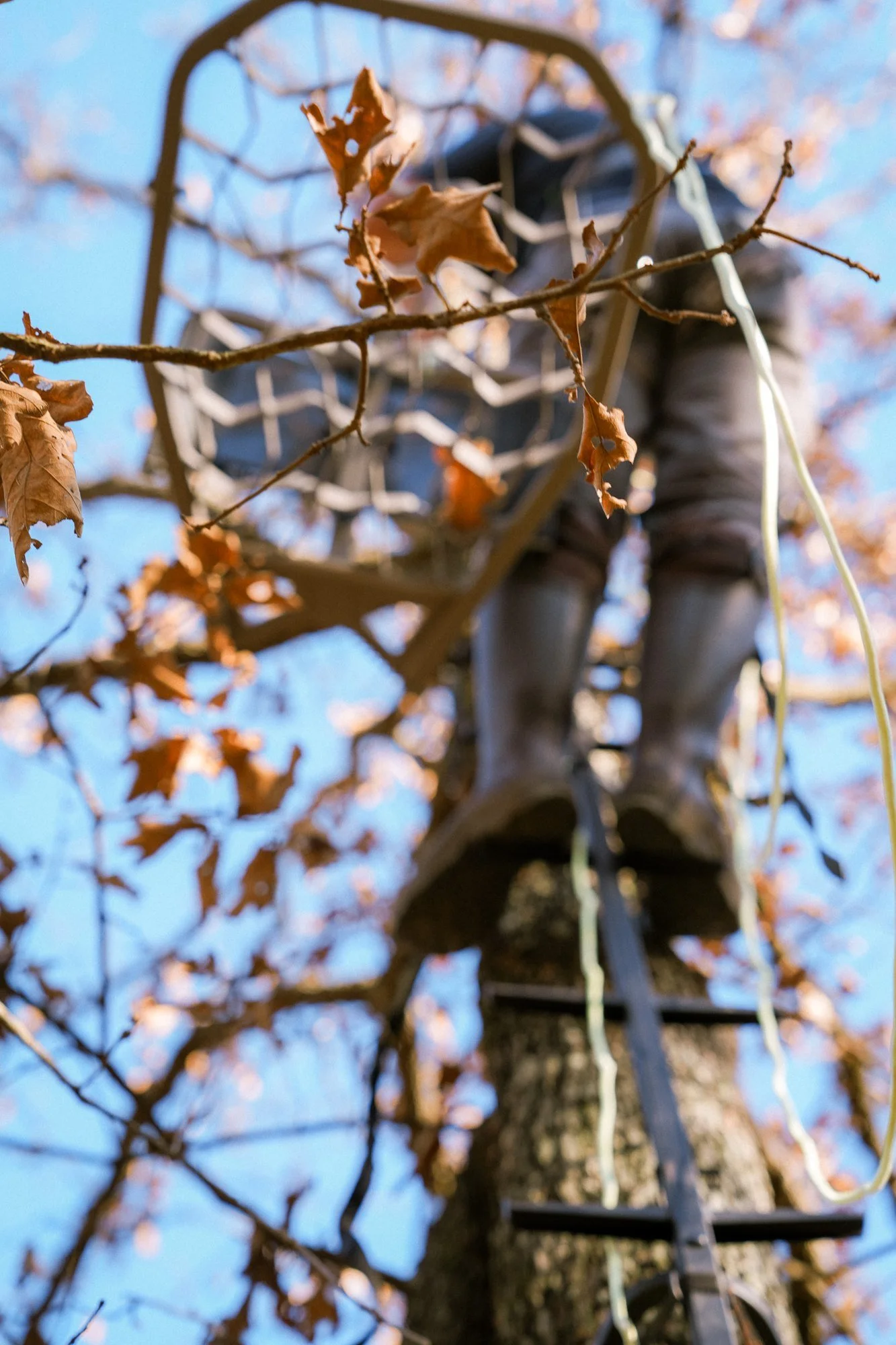
Hang it where the sign says, not where the old stand is.
The smokepole week: the rules in plain English
Read the regulations yourself, but here's the short version for 2026:
Season: Saturday, October 24, through Sunday, November 1.
Shooting hours: half an hour before sunrise to half an hour after sunset.
Limits: four deer during muzzleloader season, no more than one antlered. They count toward the six-deer combined season limit, no more than two antlered. Antlerless limits vary by zone, so check yours before Saturday.
Legal muzzleloader: loaded from the muzzle, .40 caliber or larger firing a single projectile, or a 20 gauge or larger firing a single slug.
Hunter orange: muzzleloader hunters need an orange head covering and an upper garment, at least 400 square inches together. Bowhunters in the woods that week need an orange hat or vest too.
Check-in: within 24 hours, on the Go Outdoors Oklahoma app.
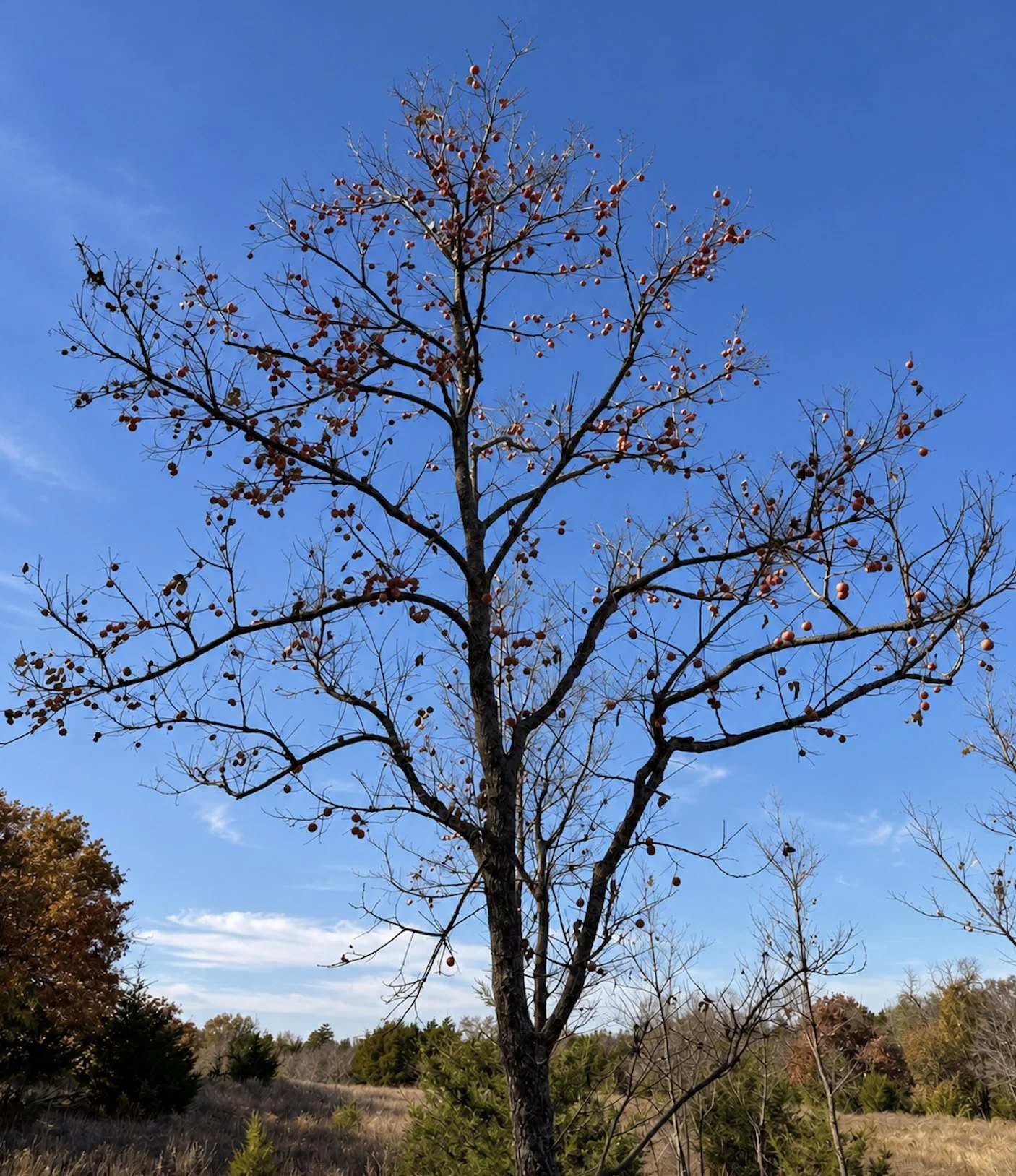
The first frost often makes the Persimmons sweet. They can be a big attraction this time of year when the weather shifts to cold. The does are on them, and the bucks know it.
Make one sit count
With one shot and a cloud of smoke, the muzzleloader rewards patience over hustle. Our version of the week:
Hunt mornings near bedding. Bucks heading back to bed past their scrapes at first light are the ones you'll see in daylight. Slip in early and be settled before legal light.
Hunt evenings on food the does are using. Acorns and green plots. Where the does eat, the young bucks show up, and sooner or later an older one checks them.
Know your range. Take the shot you've practiced, off a rest, broadside or quartering away. Through the smoke, mark the spot and give it time.
Age him before you pull. A buck working scrapes in October can look bigger than he is. Look at the belly, the neck and how the legs look against the body. On our ground the goal is bucks 5.5 and older.
Your turn
Where are the scrapes on your place this week: field edges, timber trails or inside corners?
Have you ever killed a buck on a scrape in daylight? Tell us the county and the time.
Gear in this story
Tactacam Reveal X 4.0 ($129.99). How we watch a scrape without walking in. The time stamps tell us when to hunt it.
Tactacam Reveal Tree Mount ($9.99). Lets you angle the camera across the branch and the dirt, and lock it there.
Novix Helo hang-on ($369.99) and Novix climbing sticks. Light and quiet, so you can hang where the sign says on the right wind.
WRX365 Pro members get 5 percent off everything in the RX Store.
Before you go
If you tag one during the smokepole week, log it in the WRX365 Harvest Registry at whitetailrxtools.com. Score & age your deer free, and it goes into your season summary on January 20 (scores and ages are estimates, not official Boone & Crockett or Cy Curtis scores). And join the free Hunt Club to get next Tuesday's story on aging a buck on the hoof.
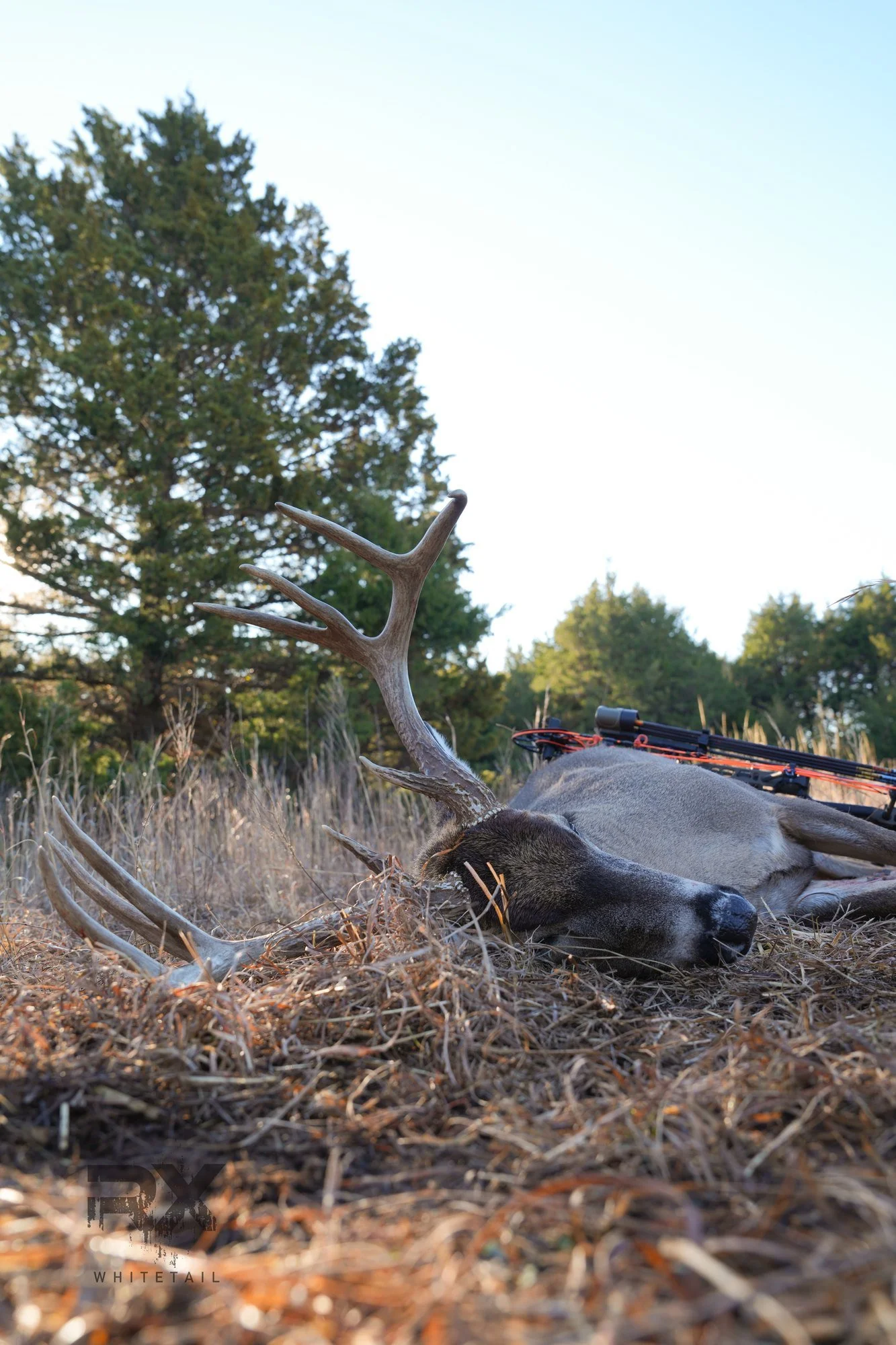
Log him, then age him. It all goes in your January 20 summary.
Sources
ODWC Deer Big Game Season (2026-27 dates; muzzleloader limit of four, one antlered; six-deer combined limit): https://www.wildlifedepartment.com/hunting/regs/deer-big-game-season
ODWC Big Game Regulations (legal muzzleloaders, hunter orange, shooting hours, check-in): https://www.wildlifedepartment.com/hunting/regs/big-game-regulations
ODWC 2025-26 Big Game Harvest Report (70,537 hunters, 15,636 muzzleloader deer; 10,580 in 2024-25): https://www.wildlifedepartment.com/outdoorok/ooj/2025-26-big-game-harvest-report
ODWC Rut Report 2025 ("mid-November is peak breeding time" in the central region): https://www.wildlifedepartment.com/outdoor-news/rut-report-2025-deer-remain-active-gun-season-arrives
Huang et al. 2024, scrape visitation in Tennessee (107 scrapes; 67% at night; bucks 4.5+ 16% in daylight; 73/23/4 split; peak first half of November), Journal of Mammalogy: https://doi.org/10.1093/jmammal/gyae050
Egan et al. 2023, scrape behavior in Nebraska (adult bucks smelled the branch on 70% of visits, scraped on 36%), Ecosphere: https://doi.org/10.1002/ecs2.4434
Sawyer, Marchinton & Miller 1989, does' response to rubs and scrapes (59% of fresh rubs), Journal of Mammalogy: https://doi.org/10.2307/1381536
National Deer Association, "How Many Rubs Does a Buck Make?" (1,000–1,200 per mature buck; 3,000+ vs 400–500 per square mile): https://deerassociation.com/how-many-rubs-does-a-buck-make/
Alexy et al. 2001 (Georgia scrape study) and other camera surveys, as summarized by American Hunter: https://americanhunter.org/content/most-scrapes-aren-t-worth-a-sit