
Oklahoma's archery season opens Thursday, October 1, and it looks like a wet one. As of Sunday, the National Weather Service forecast for Tulsa calls for an 80 percent chance of showers and possibly a thunderstorm on opening day, with a high near 78. Thursday night stays wet, with a low around 65. The wind starts out of the south and swings around to the north in the afternoon, so check it again before you pick your evening stand.
That changes the plan. With the rain we've had this week and more on the way, there are puddles everywhere, and a pond or water hole is just one more place to drink. So forget the water-hole setup this year. The first sit comes down to a harder question: do you hunt your best stand, or save it?
What the opener actually is
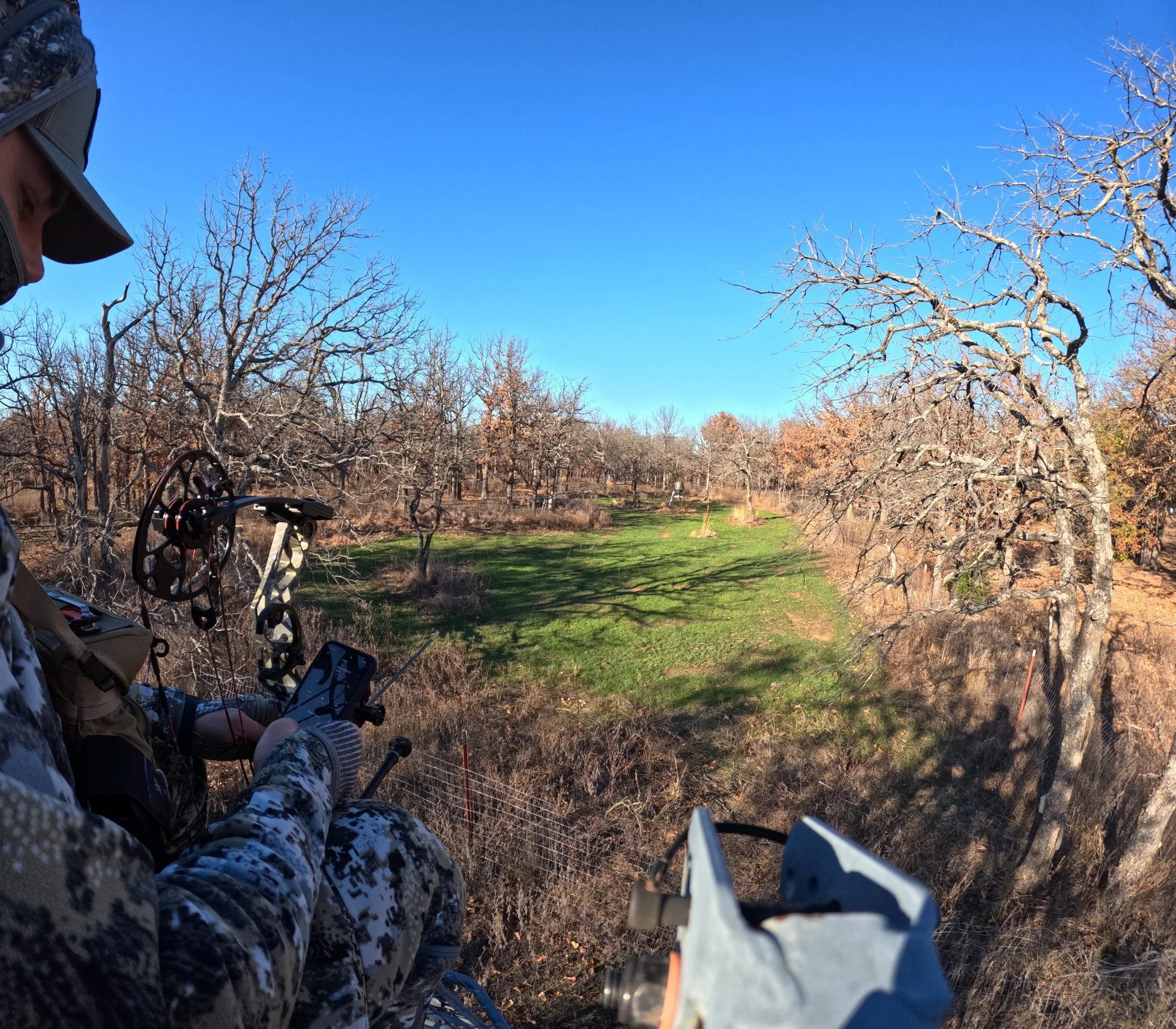
Start with the numbers, because they take some pressure off. Last season 109,810 Oklahoma archers took 39,084 deer, about 29 percent of the state's total harvest of 133,791. And 43 percent of those archery deer were antlerless.
So a lot of bowhunters here fill the freezer, and a lot of them do it with a doe. The limit is six deer across all seasons, no more than two antlered, which leaves plenty of room to take a mature doe on October 1 without touching your buck tag.
The best-stand rule
Every property has one stand you think about all summer. Here's the rule we use on our own ground: don't sit it on opening day unless your target buck is patterned.
Patterned means something specific. He shows up on camera in daylight, at least 45 minutes before legal shooting light ends, three evenings in a row. For Thursday's opener, that's the stretch early next week, Monday through Wednesday. One evening is luck. Three straight is a pattern.
Here's how to read the photos. Legal shooting light ends half an hour after sunset, so 45 minutes before that is about 15 minutes before sunset. If his time stamps on Monday, Tuesday and Wednesday all land before that, you have a buck you can plan around. If they creep later each evening, or he skips a night, he's telling you he isn't ready.
If you don't have that, stay out. The worst thing you can do is bump him out of that spot right before opening weekend. A spooked buck doesn't just move over a ridge. He can end up on a neighbor's place he doesn't know, where he's easier to kill, and it won't be you who gets the shot.
If you do have him patterned, hunt it, but only if the wind is right and only if you can get out afterward without being detected. It's a roll of the dice either way. Your first sit in a stand is the best chance you'll get out of it all season, because the deer haven't figured out that it's there. Don't waste it on a day when the conditions aren't right.
Why pressure now pays off later
This is where cellular cameras earn their keep. Every time you walk in to pull a card, you leave scent on the trail and tell the deer somebody's been there. Check your cameras from the house instead, and the woods stay quiet. If you need to switch battery cartridges or battery belts, bring them with you for your sit and hit the camera on your way back to the truck.
Less pressure before the season lets mature bucks settle into a daylight pattern earlier. That matters right now, because the first few days of season may be the last few days of his summer pattern. Once his testosterone rises and he starts searching for does, the pattern falls apart and he could be anywhere. The window to catch a mature buck on a predictable route is short, and it's open this week.
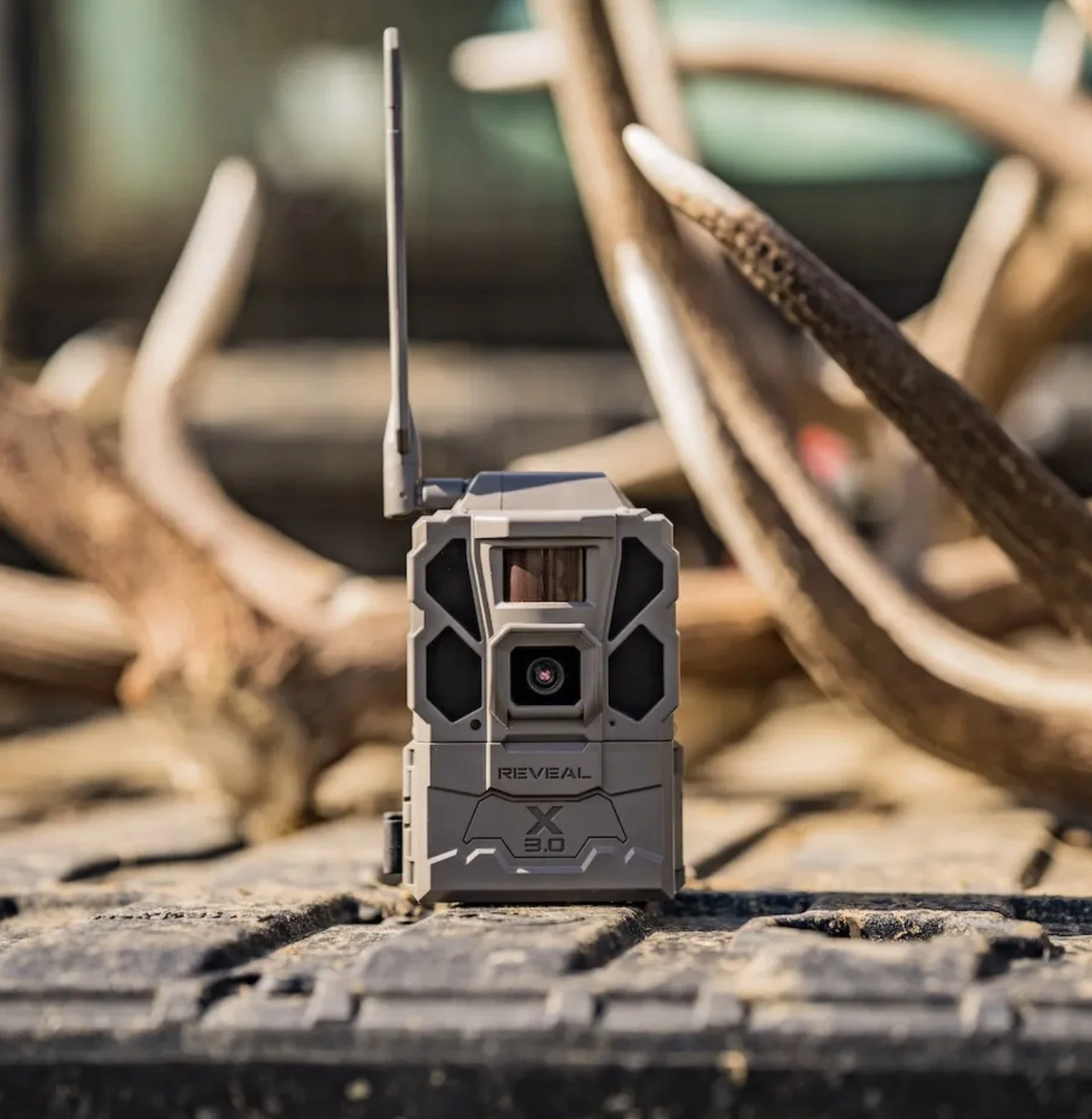
Check it from the house, and the woods stay quiet.
If you have a buck patterned: pick the stand
If you're going after a specific buck on the opener, the stand needs all of these:
Great access. A quiet way in and out with minimal disturbance and little chance of being seen, heard or smelled.
A defined travel route between where he beds and where he eats. Your cameras should show him on it.
Good distance from his bed. Close enough to catch him on his feet in daylight, far enough that you don't spook him while he's still bedded.
The perfect wind. Not "pretty good." If the wind isn't right, it isn't the day.
Rain can help you here. Wet leaves are quiet to walk on, and a steady drizzle covers noise and knocks down scent.
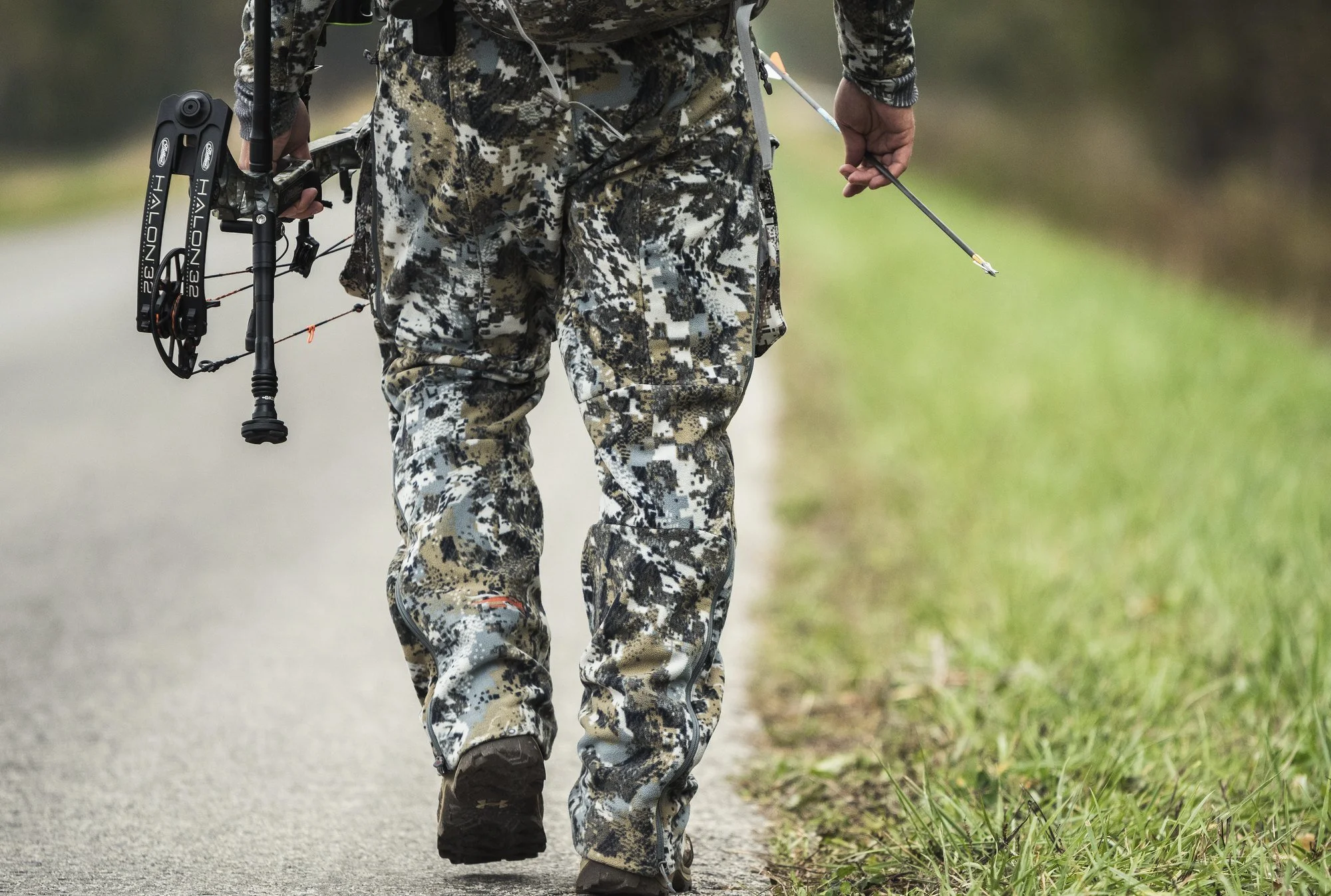
“Camp Monster” hunt, 2017, Illinois (photo credit @JordanGillPhotography)
If you don't: make it an observation sit
No patterned buck? Then Thursday is an observation sit, and that's a good day in the stand.
Pick a stand with a good wind for the day and good doe traffic, ideally on the way to a food source they're already using with good sight lines. Watch how the deer come in, where they enter, which trails they use and what time they show up. Write it down when you get back to the truck. A notebook of opening-week sits is worth more in November than a buck you bumped in October. And if a mature doe gives you a clean shot, take it. That's meat in the freezer, one less mouth on your habitat, and information you'll use the rest of the season.
If the rain lets up by evening, the evening sit is the better bet anyway. Deer often move hard when the rain lets up, and you'll be walking in with the woods quiet.
The last-minute checklist
The days before the opener are for tuning, not scouting. Before Thursday:
Check your zero one last time. Shoot every pin at its distance and make sure nothing moved.
Shoot the in-between yardages. Deer don't usually stand at 20 or 30. Shoot random yardages… 23, 27 and 34 so you know those arrows land where you think they will.
Check and recheck your gear. Harness, lifeline, release, rangefinder, headlamp and knife. Find the problem in the garage, not in the tree.
Charge every battery. Rangefinder, headlamp, phone and anything else that runs on one. Do it once this season and never think about it again.
Focus on scent control. Wash all your hunting clothes in scent-free detergent with scent-free dryer sheets. Pro tip: run two loads of towels with the same scent-free detergent and dryer sheets first. That pulls leftover scent out of the washer before your hunting clothes go in. After they're washed, spray them with a scent-neutralizing spray and hang them to dry. Then into your preferred storage container: an air tight tote or bag.
Pack the night before, and check it twice. Lay it all out, pack it, then go through it again.
Run it through ozone. If you have an ozone locker or tote, load all your gear the night before and run it on the most aggressive cycle. Ozone is oxygen with a third atom that doesn't stay attached for long. That extra atom breaks off and bonds to odor molecules and odor-causing bacteria, changing their chemistry so they don't smell the same. What's left breaks back down into plain oxygen. Follow the maker's wait time before you open it, because ozone is hard on your lungs too.
Be connected from the ground up
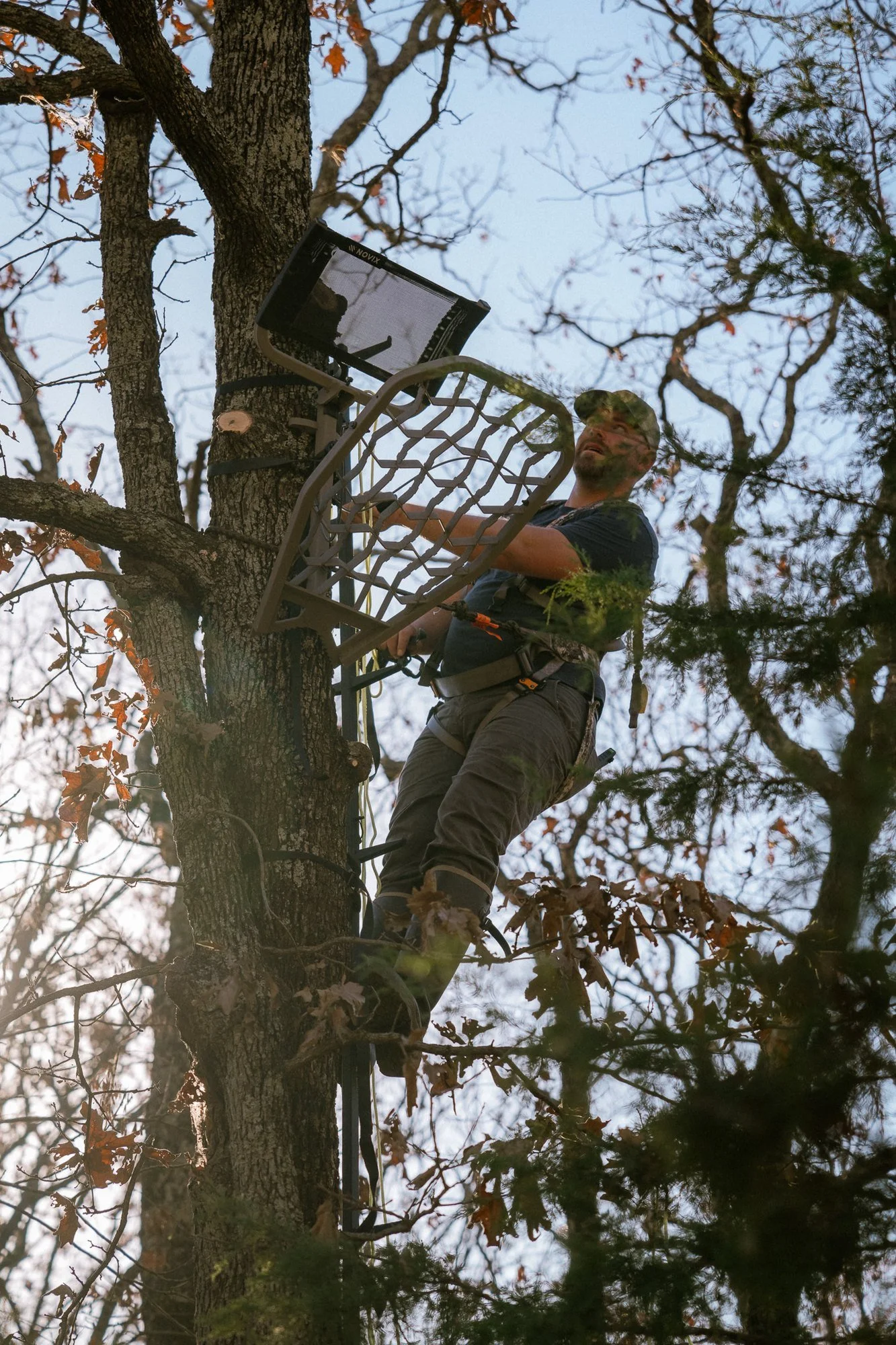
Connected before your boots leave the ground.
This part isn't exciting, and it matters more than anything else in this story. The Tree Stand Safety Awareness Foundation reports that 99 percent of hunters injured in stand falls were not connected to the tree. Lock-on stands account for about 31 percent of falls, and the leading cause is slipping or losing your grip while climbing.
Rain makes that worse. Wet steps are slick, and so are wet gloves. Wear a full-body harness and stay connected from the moment your boots leave the ground until they touch it again. A lifeline rope makes that easy. Pull your bow up on a rope. Take it slow.
Plan the recovery and the meat before you shoot
A high in the upper 70s is still warm for venison, rain or not. Plan for meat care before you ever draw.
Know the rules. Legal shooting hours run from half an hour before sunrise to half an hour after sunset. Broadheads must be at least 7/8 inch wide, and compound bows need at least 30 pounds of draw weight.
Check your deer. Every deer must be checked in within 24 hours of leaving the hunt area, before the carcass is processed. It takes two minutes on the Go Outdoors Oklahoma app.
Cool it fast. Get the deer field dressed, skinned, quartered and on ice the same night. Keep a cooler and ice in the truck.
Mind the rain on the blood trail. Rain washes blood away fast. Mark the spot where the deer was standing and the last blood you find, and don't wait longer than you need to on a good hit. On a marginal hit, the usual rule still applies: back out and give it time.
Your turn
We want to hear from Oklahoma ground:
Are you sitting your best stand Thursday, or saving it? Tell us why.
What does rain do to the deer on your place? Do they move right after it quits, or hole up?
Gear in this story
Tactacam Reveal cellular camera. The reason we can follow the three-day rule without walking in. You see the daylight pattern from the house, and the woods stay quiet until it's time to hunt.
Novix hang-on stand and climbing sticks. Quiet, light and easy to hang alone at midday, so you can set a stand late without spooking your deer.
Whitetail Rx cooler. It rides in the truck from October 1 on, with ice. Warm opening weeks are why.
Before you go
If you take a deer this week, put it in the Harvest Registry on the free WRx365. Tooth-age your doe or green-score your buck, and it goes into your season summary on January 20. Scores are estimates, not official Boone & Crockett or Cy Curtis scores.
And if you want next Tuesday's story in your inbox, plus the Buck of the Week, join the free Hunt Club. Next up: why the October lull is really a camera problem.
Good luck Thursday. Be connected, and play the wind.
Sources
Opening-day forecast for Tulsa (80% chance of showers and possible thunderstorms, high near 78, Thursday night low around 65, south wind becoming north in the afternoon): National Weather Service, Tulsa forecast, checked Sunday, Sep 27, 2026.
Season dates, bag limit (Oct 1, 2026 to Jan 15, 2027; six deer, two antlered): ODWC Deer Big Game Season
2025-26 harvest (133,791 total; 39,084 archery, 29.2%; 109,810 archers; 43% antlerless): ODWC 2025-26 Big Game Harvest Report
Shooting hours, 7/8-inch broadheads, 30 lb compound minimum, check-in within 24 hours: ODWC Big Game Regulations
Tree stand fall figures (99% not connected; lock-ons 31% of falls; slips while climbing the leading cause), citing the Tree Stand Safety Awareness Foundation: Grand View Outdoors
Archery opener and license notes: Oklahoma Farm Report, Sep 22, 2026
Ozone section: oxidation by the extra oxygen atom, reverting to O2, about a 30-minute half-life: Restoration & Remediation, "Ozone 101"; how ozone changes other molecules and why it's hard on your lungs: EPA, Ozone Generators that are Sold as Air Cleaners.